
It starts innocently with a last-minute Tuesday pickup request, an unexpected sleepover, and another unplanned grocery run for your adult child’s household. Within weeks, your own schedule disappears under someone else’s emergencies.
Soon, joyful visits blur into physical exhaustion, shrinking retirement savings, and tense silent standoffs over bedtime, snacks, or screen rules. Loving your family deeply should never mean running on empty.
Setting clear grandparent boundaries early protects your daily energy, safeguards your financial future, and builds steadier relationships across generations. These seven practical shifts help you stay generous without burning out.
Why Good Intentions Turn Into Caregiver Burnout
Grandparents carry an enormous share of modern family life, often without anyone noticing the cumulative weight. According to Pew Research Center and U.S. Census Bureau figures released in September 2026, roughly two-thirds of U.S. adults ages 65 and older were grandparents in 2024.
Many older adults step in far beyond occasional weekend fun. In 2024, 8% of U.S. children lived in a household headed by a grandparent, placing kinship caregivers directly at the center of daily parenting.
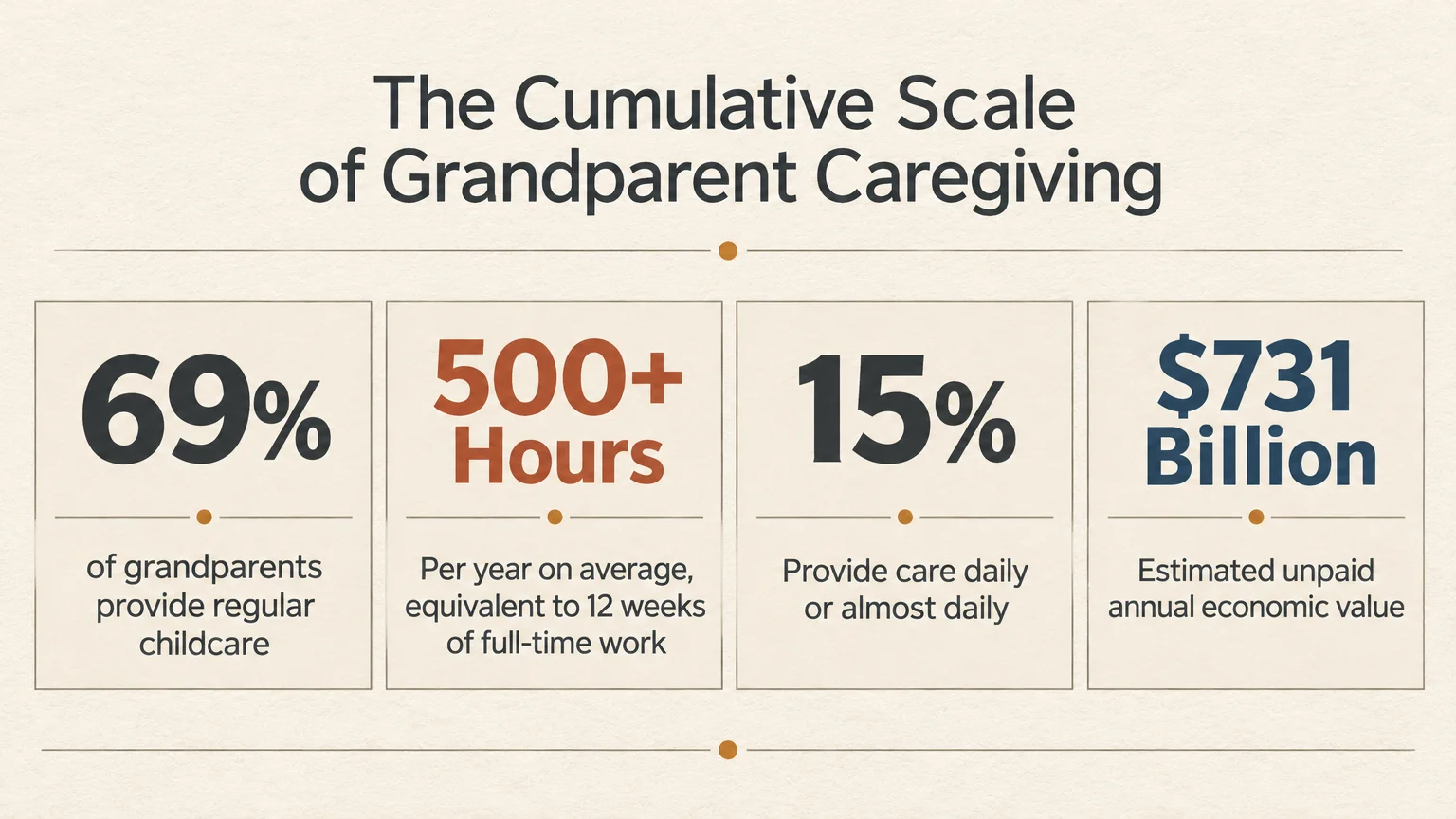
Even when grandchildren live elsewhere, the weekly hours add up quickly. A June 2026 AARP report titled Powering Families found that 69% of America’s 65 million grandparents provide some level of childcare.
Roughly 15% of grandparents provide care daily or almost daily, and grandparents average more than 500 hours of caregiving per year. That commitment equals more than 12 weeks of full-time work every single year.
That unpaid support carries massive economic value—an estimated $731 billion annually when measured against standard childcare wages. While 79% of grandparents find caregiving deeply fulfilling, 13% report feeling physically taxed by the role and 26% feel both energized and drained.
Economic pressure on working parents often drives this unspoken reliance on older relatives. A May 2026 report from Child Care Aware of America revealed that average annual childcare prices reached $13,184 in 2025, climbing 23% since 2021.
That national average consumes 10% of a married couple’s median income and 33% of a single parent’s median income. Costs hit extreme highs in states like Massachusetts at $27,067 per year, compared with $6,492 in Mississippi.
Faced with steep tuition bills, lower- and middle-income parents turn to relatives as their primary safety net. Single parents, blended households, and shift-working couples often depend on grandparents just to keep their jobs.
Without explicit limits, however, helpfulness quietly hardens into entitlement and resentment. Research from the C.S. Mott Children’s Hospital National Poll on Children’s Health shows that 43% of parents disagree with grandparents over parenting choices.
Those clashes carry real relational risks when expectations stay unspoken. About 15% of parents say ongoing disagreements damage the grandparent-grandchild bond, and 15% actively limit how much time their children spend with certain grandparents.
That restriction rate jumps to 32% when grandparents promise to change a behavior but fail to follow through. When grandparents flatly refuse to adjust, 42% of parents cut back visitation, compared with just 6% when no change was requested.
Long-term disconnection happens more often than most families expect. An August 2025 YouGov survey found that 38% of U.S. adults are estranged from a close relative, including 6% from a grandchild and 9% from a grandparent.
Yet 66% of estranged grandparents say they would consider reconciling if a healthy path opened up. Clear boundaries set early prevent minor friction from growing into years of painful distance.

The 7 Boundaries Grandparents Wish They’d Set Sooner
Most grandparents wait until exhaustion, financial anxiety, or an ugly argument forces a confrontation. Setting clear expectations while relationships are warm keeps everyone feeling respected and secure.
1. Defining Your Caregiving Hours and Backup Plan
Saying yes to every emergency call trains adult children to treat your calendar as endlessly open. Over time, missed medical appointments, canceled hobbies, and chronic fatigue make you resent the very visits you used to anticipate.
Start by naming the exact days and hours you gladly offer each week. Decide ahead of time whether you are available for Tuesday and Thursday afternoons, emergency sick care, or date-night babysitting once a month.
Require parents to arrange a paid sitter, neighbor, or co-parent backup before your regular shift begins. When you have a dental visit, a planned trip, or simply need rest, the backup plan activates automatically without guilt.
Try sharing a clear schedule statement before a new school semester or job change starts. You might say, I love having Leo on Tuesdays from three to six, and on other days you will need your backup sitter so I can keep my health appointments.
2. Protecting Your Retirement Before Funding Adult Children
Financial generosity easily outpaces what fixed incomes and retirement accounts can safely sustain. According to AARP, 90% of grandparents spend money on grandchildren, averaging $2,654 per year across all grandchildren.
That annual outlay—more than the $2,071 average monthly Social Security retiree benefit—helps cover daily necessities for 41% of spending grandparents and education or activities for 23%. Another 8% contribute toward medical, dental, or mental health care, leaving 14% feeling strained.
Direct help to grown children adds an even heavier drain. A September 2026 LendingTree report found that 71% of parents with adult children have provided financial support, and 64% of recent supporters experience financial stress as a result.
Among recent helpers, 18% struggled with everyday expenses, 16% fell behind on debt, 13% saved less, and 11% compromised retirement planning. Even more striking, a March 2025 Savings.com survey showed parents supporting adult children averaged $1,474 per month per child.
Those working parents put more than twice as much money toward their grown children each month as toward their own retirement funds. Meanwhile, 2024 U.S. Census Bureau data reported in October 2026 showed a median annual transfer of $4,725 to adult children living independently.
Protect your later years by establishing an annual family-giving ceiling before anyone asks for help. Separate joyful birthday gifts from recurring household bills like rent, groceries, or car insurance.
When adult children request ongoing support, attach clear timelines and shared goals—just as 77% of supporting parents in the Savings.com study chose to do. You protect both generations when you refuse to sacrifice your long-term housing or healthcare security.
3. Deferring to Parents on Sleep, Screens, and Car Safety
Pediatric health guidelines evolve quickly, and clinging to how you raised kids decades ago sparks fast conflict. The C.S. Mott Poll identified discipline at 57%, meals and snacks at 44%, screen time at 36%, health and safety at 25%, and bedtime at 21% as top flashpoints.
Updating your routine around current medical standards builds instant trust with anxious parents. Under American Academy of Pediatrics safe-sleep rules reaffirmed through 2026, infants up to age 1 must sleep alone, on their backs, on a firm, flat surface.
Keep cribs and bassinets completely free of loose blankets, pillows, crib bumpers, weighted blankets, and soft toys. Avoid letting babies sleep routinely in swings, car seats, or on couches, and avoid inclined sleepers steeper than 10 degrees.
Car safety standards have also shifted significantly from earlier eras. Verified April 2026 pediatric guidance advises keeping toddlers rear-facing until they hit the car seat’s maximum height or weight limit, well beyond their second birthday.
Children should then ride in a forward-facing five-point harness before moving to a belt-positioning booster until the vehicle belt fits properly—usually at 4 feet 9 inches tall and ages 8 to 12. Every child under age 13 belongs in the back seat.
Screen rules bring another major adjustment for older caregivers tempted by easy digital distractions. Updated February 2026 pediatric recommendations discourage solo screens—aside from video chats—before 18 months, and advise roughly one hour daily of co-viewed, high-quality content for ages 2 to 5.
Keeping mealtimes, bedrooms, and the hour before bed completely screen-free respects both children’s sleep and parents’ routines. You can also reassure new parents by checking Centers for Disease Control and Prevention vaccine guidance before newborn visits.
Adults close to infants under 12 months who have never had a Tdap shot should get one, along with an annual flu vaccine, at least two weeks before visiting.
Adults 75 and older—plus at-risk adults ages 50 to 74—are also advised to get a single one-time RSV shot.
4. Establishing Household Chore and Hosting Limits
Multigenerational living and weekend family visits often trap grandparents in nonstop cooking, laundry, and kitchen cleanup. What begins as hospitality turns exhausting when adult children slip back into childhood habits of leaving messes behind.
Define shared labor before guests unpack or a relative moves back under your roof. Assign specific meal nights, grocery budgets, and cleanup zones so no single adult carries the entire domestic load.
In shared households, separate personal laundry and bedroom upkeep by family unit. Keep shared spaces—like living rooms, entryways, and kitchens—under a simple nightly reset rule where toys and dishes go away before bedtime.
When adult children visit for holidays, hand over tangible responsibilities rather than insisting you can handle everything alone. Asking a son to manage breakfast or a daughter-in-law to handle bedtime dishes honors their adulthood and preserves your stamina.
5. Protecting Your Privacy and Social Media Guidelines
Digital boundaries now sit alongside front-door boundaries as essential family safeguards. The C.S. Mott Poll notes that 10% of parent-grandparent conflicts erupt over sharing photos or personal details on social media.
Ask parents once how they want photos handled and follow that preference strictly. Some parents allow private family text threads only, while others ask you to blur school logos or skip posting medical milestones altogether.
Privacy works both ways inside your own home, too. If adult children drop by unannounced or treat your spare room like a storage unit, set clear arrival norms right away.
Ask everyone to text at least 24 hours before stopping by, and designate clear shelves or closets for grandchildren’s gear. Respecting each other’s doors and digital footprints keeps everyday interactions relaxed.
6. Maintaining Equal Expectations Across Siblings and Blended Families
Few things fracture adult sibling relationships faster than perceived favoritism among grandchildren. Treating grandchildren differently fuels 22% of parent-grandparent disagreements, according to the C.S. Mott Poll.
Complex modern households—including step-grandchildren, half-siblings, and adopted children—require extra care around inclusion. Make sure step-grandchildren receive the same warmth, holiday traditions, and birthday recognition as biological grandchildren.
Fairness also gets tested when one adult child earns far less, faces a divorce, or parents alone. Instead of secretly sliding cash or extra babysitting to one household, distinguish between routine gifts and temporary crisis aid.
Keep holiday spending and dedicated one-on-one time blocks balanced across households whenever possible. When one family temporarily needs emergency help, share your reasoning transparently or frame it as a defined short-term loan.
7. Safeguarding Your Emotional Bandwidth and Unsolicited-Advice Filter
Constant digital connection makes it surprisingly easy to overstep emotionally. A January 2024 Pew Research Center survey found that 73% of parents text and 54% talk by phone with a young adult child several times a week.
Frequent contact builds closeness, yet jumping in to fix every parenting frustration or marital spat leaves grown kids feeling judged. Adult children pull away when every phone call turns into a critique of their budget, career, or toddler discipline.
Adopt a simple pause-and-ask habit whenever your child vents about stress. Ask whether they want a listening ear, practical ideas, or help brainstorming a solution before offering advice.
Protect your own emotional quiet as well by turning off non-urgent notifications after dinner. Giving yourself uninterrupted evenings reminds your nervous system that you are no longer on 24-hour duty.
Communication Systems That Make Boundaries Stick
Good intentions fail without repeatable routines that keep small misunderstandings from piling up. Building three practical household systems turns awkward boundary talks into normal family maintenance.
The Quarterly Family Reset Ritual
Never negotiate caregiving hours or money limits while someone is rushing out the door for work. Schedule a calm 20-minute family check-in every three months before school schedules, sports seasons, or holiday travel shift.
Review three questions together over coffee or a video call. First, confirm which regular caregiving days still feel sustainable for your health and energy.
Second, update any new safety, allergy, medication, or bedtime preferences for growing grandchildren. Third, review upcoming travel dates, school breaks, and backup sitter contacts so nobody scrambles at the last minute.
Putting routine check-ins on the calendar removes personal blame from schedule changes. Adjusting your hours becomes a normal seasonal update rather than a sudden rejection.
The Shared Household Charter for Multigenerational Homes
When three generations live under one roof—whether by cultural tradition, caregiving need, or high housing costs—unspoken assumptions create daily friction. Writing a simple one-page household charter protects everyone’s dignity.
Cover four practical areas together: monthly cost contributions, quiet hours, shared chore rotations, and private personal space. Decide whether adult children contribute a set utility share, buy household staples, or cover home maintenance.
Clarify when grandparents are off-duty, even when sitting in the same living room. A closed bedroom door or designated reading chair signals personal downtime that grandchildren learn to respect early.
Post the weekly chore rotation and meal plan on the refrigerator so everyone sees the plan at a glance. Clear visual agreements prevent quiet scorekeeping between exhausted adults.
Conflict Resolution Scripts for High-Friction Moments
Having exact words ready lowers your heart rate when a request catches you off guard. Use a three-part structure—warm empathy, a clear boundary, and a realistic option—to hold your ground kindly.
When declining last-minute babysitting, try this phrasing: I know how stressful morning meetings are when daycare closes, and I wish I had the stamina today, so I cannot cover Thursday—let me text you the sitter number we saved last month.
When parents ask you to follow a newer safety rule that feels unfamiliar, respond without defensiveness.
You might say, Thank you for walking me through the rear-facing seat setup; keeping Maya safe matters most to me, so show me once more how you like the chest clip positioned.
When stepping back from recurring financial bailouts, keep your tone steady and loving.
Try saying, I care deeply about your stability, and my financial planner reminded me I cannot pull from retirement accounts anymore, though I am happy to help cover groceries this week while you map out next month’s budget.

Inside a Family Reset: Counseling Insights and Real-World Practice
Family counselors frequently observe that adult children rarely hear a grandparent’s boundary as a simple scheduling fact. Instead, stressed parents often interpret a new limit as quiet anger or disapproval of their parenting.
Clinical social workers encourage grandparents to pair every firm limit with explicit reassurance of ongoing love. Explaining that you are pacing yourself so you can stay healthy and active for years helps adult children see the bigger picture.
Therapists also warn against triangulation—complaining about one adult child’s parenting to another sibling, or undermining a parent’s rule with secret treats. Direct, respectful conversations between the adults involved build far stronger trust than side-channel venting.
Consider how this plays out in a real-world composite scenario drawn from common caregiving dynamics. Elena, a 66-year-old retired bookkeeper, began watching her two-year-old grandson three full days a week after her son finalized a divorce.
Within six months, Elena developed persistent back pain from lifting her grandson and spent hundreds monthly on diapers, takeout, and toys she could barely afford. Worse, she and her son argued weekly because she let her grandson nap on the couch with cartoons playing.
Instead of shutting down or snapping during a pickup, Elena invited her son and his co-parent to a Sunday afternoon reset without the toddler nearby. She shared honestly that her back needed recovery days and that her retirement budget could no longer absorb ongoing supplies.
Together, they shifted Elena’s caregiving to Tuesdays and Thursdays only, while her son enrolled his toddler in a sliding-scale community preschool on Mondays and Wednesdays.
Elena also placed a firm pack-and-play in her guest room and taped a simple bedtime and snack checklist inside her pantry door.
Within four weeks, Elena’s back pain eased, her monthly grocery bill stabilized, and Tuesday mornings felt joyful again. Her son felt respected as the lead parent rather than scrutinized, and their Sunday dinners returned to easy laughter.
Your Resilience Toolkit: Community, Health, and Financial Support
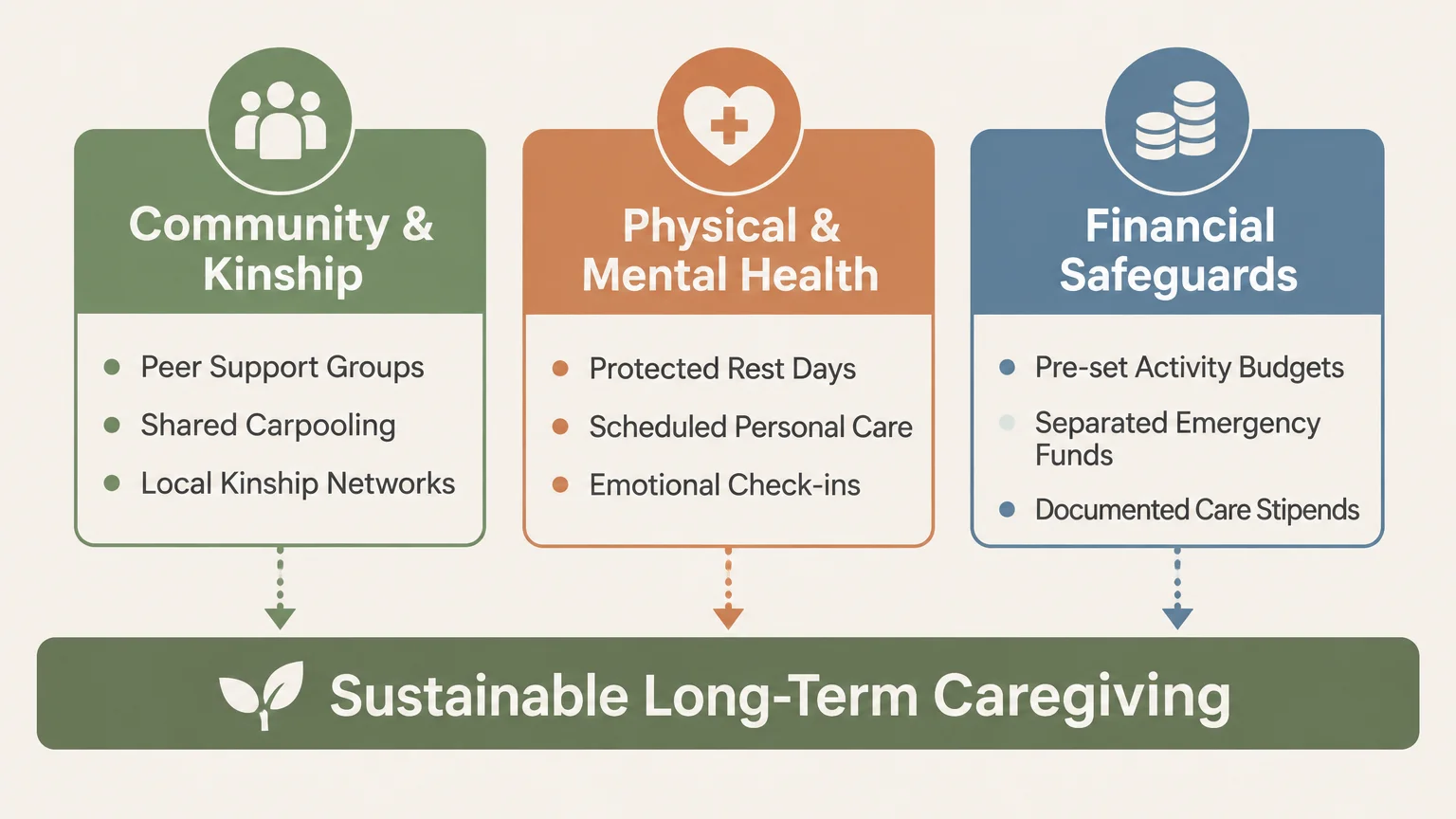
You do not have to solve modern childcare gaps or eldercare pressures single-handedly. Tapping into community programs and professional support lifts strain off your shoulders while giving grandchildren high-quality resources.
Start by exploring your local Area Agency on Aging, which connects older caregivers with respite grants, wellness classes, and kinship caregiver support groups. If you are raising grandchildren full time, kinship navigators can help access school meal programs, legal aid, and state stipends.
Encourage adult children to check every childcare funding option before leaning exclusively on family hours. Employer-sponsored dependent care accounts, state pre-kindergarten programs, and sliding-scale community centers can dramatically cut that $13,184 average annual tuition bill.
When family communication gets stuck in painful loops, telehealth family counseling makes outside guidance accessible without extra commuting. Many health plans and employee assistance programs cover short-term counseling sessions focused on multigenerational transitions.
For financial boundaries, schedule a single session with a fee-only financial planner to stress-test your retirement income against any family gifts. Having concrete numbers on paper empowers you to say no calmly to unsustainable requests.
Finally, look for hospital-sponsored grandparent refresher courses offered by local pediatric clinics and community health centers. Spending two hours learning updated CPR, car-seat installation, and infant safe-sleep practices turns potential parent-grandparent friction into shared confidence.
Frequently Asked Questions About Grandparent Boundaries
How do I introduce boundaries after years of saying yes?
Own the change gracefully without blaming your adult children for past habits. Tell them your energy, health, or budget needs have shifted, and give at least two to four weeks of notice before new limits take effect so they can line up alternatives.
What if one adult child needs more help than their sibling?
Separate routine grandparenting perks from temporary crisis aid so siblings understand the difference. Keep birthday gifts and regular grandparent time equal, and communicate openly if short-term medical or job loss help is going to one household for a set period.
How can grandparents stay aligned when co-parents disagree?
Refuse to take sides or act as a messenger between divorced, separated, or conflicting co-parents. Follow each parent’s basic safety rules during their custodial time, keep conversations focused strictly on the child’s comfort, and encourage parents to resolve disputes directly.
How do I tell normal tiredness from caregiver burnout?
Watch for warning signs that linger after a good night’s sleep, such as dread before scheduled visits, chronic aches, irritability over minor messes, or neglecting your own medical checkups.
When caregiving steals the warmth you used to feel, it is time to trim your hours.

Building Long-Term Stability One Small Shift at a Time
Healthy boundaries are bridges that keep generations connected, never walls meant to shut loved ones out. Pew Research Center findings show that 70% of grandparents ages 65 and older stay in regular touch with grandchildren, and 41% connect multiple times every week.
Protecting that bond requires honest limits around your time, wallet, home, and emotional peace. Even a single clear conversation this week—about backup sitters, safe-sleep rules, or Sunday dinner cleanup—creates room for deeper joy ahead.
Start small, stay steady, and remember that taking good care of yourself models healthy adulthood for every generation watching you. Your warmth lasts longest when you guard the energy behind it.