
You can love a partner deeply without dismantling your identity, finances, or sanity in the process. When devotion morphs into self-erasure, the connection inevitably collapses under the weight of resentment.
Picture Maya, who canceled her dream residency interview across the country because her partner felt intimidated by her ambition. Two years later, the relationship ended anyway, leaving her grieving both a partner and an abandoned career.
True love expands your world rather than shrinking your footprint. Protecting your non-negotiables is the most reliable way to cultivate lasting intimacy.

The Psychological Architecture of Self-Silencing in Love
Societal conditioning frequently trains women to measure relationship success by how much personal discomfort they can quietly tolerate.
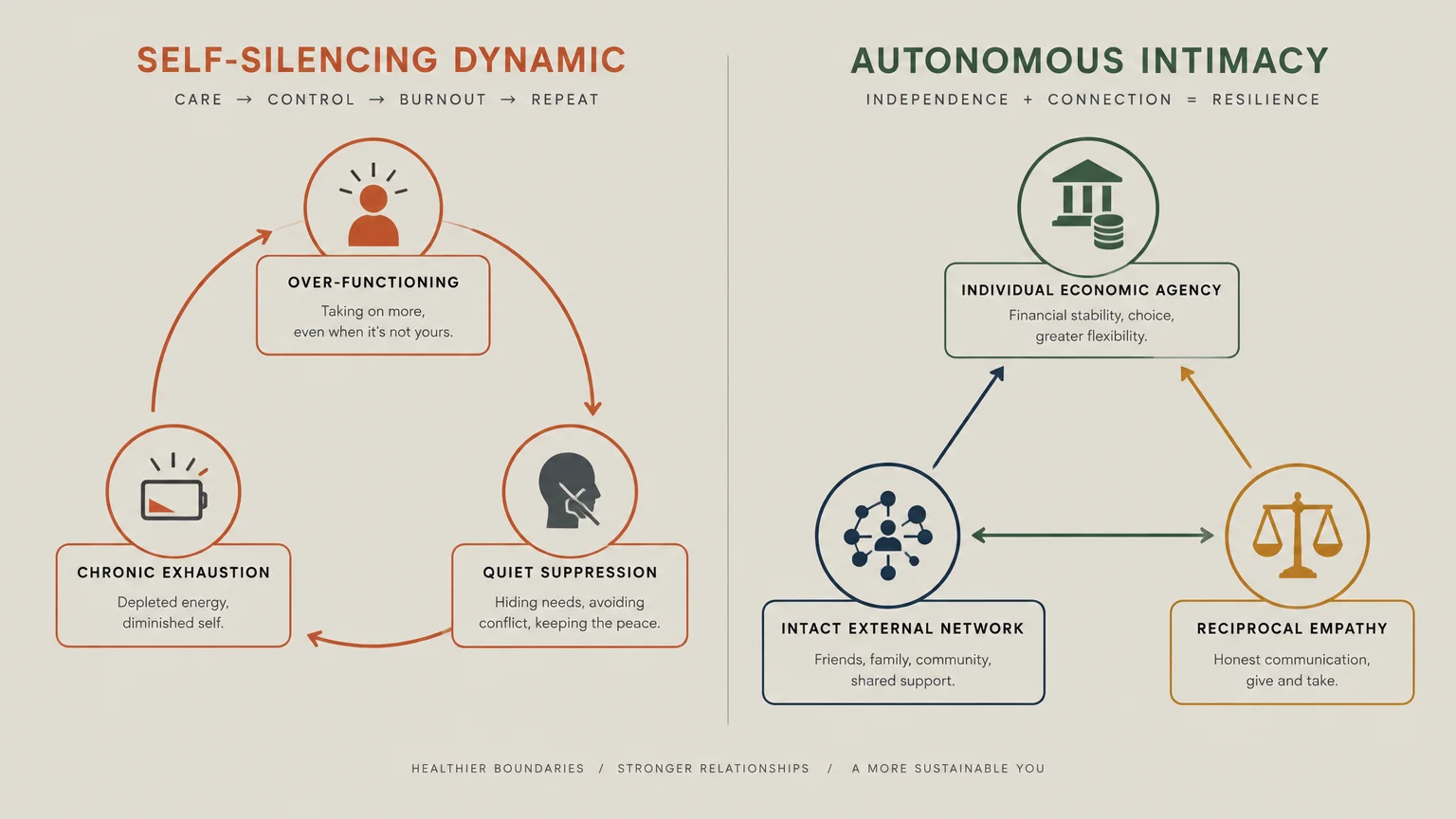
Relationship researchers call this pattern “self-silencing”—the habitual suppression of authentic feelings, opinions, and needs to preserve harmony. Over time, this dynamic creates chronic emotional exhaustion and severe relational dissatisfaction.
When you mute your desires, your partner falls in love with an artificial persona rather than who you truly are. True intimacy requires mutual vulnerability, which cannot exist without honest self-expression.
By identifying where you routinely over-function, you can restore equilibrium before quiet frustration transforms into irreparable detachment.
Ten Things Women Should Never Do for a Partner
1. Relinquishing Your Financial Independence
Merging lives should never mean surrendering complete control over your personal economic security. Financial autonomy grants you the agency to make self-directed choices throughout your life.
Maintain your own bank accounts, track joint expenditures transparently, and stay informed about investments. Financial dependence creates an unbalance of power that leaves you vulnerable if life takes an unexpected turn.
If your partner insists that you leave financial management entirely to him, recognize that as a potential warning sign. Healthy partnerships encourage both adults to remain financially literate and autonomous.
2. Diminishing Your Core Career and Creative Ambitions
Supportive partners celebrate your achievements rather than feeling intimidated by your trajectory. You must never downplay your professional milestones or abandon creative passions to soothe an insecure ego.
Suppressing your drive to make someone else comfortable breeds deep, corrosive resentment over time. A thriving relationship always possesses ample room for two ambitious partners to succeed together.
Guard your career aspirations fiercely. The right partner will act as your most enthusiastic advocate, not a barrier to your potential.
3. Severing Ties with Your Support Network
Romantic isolation frequently arrives disguised as extreme passion, creating a bubble where you rely exclusively on one person. Losing touch with trusted friends and mentors leaves you emotionally stranded.
Insights from Mental Health America confirm that varied relational attachments protect long-term emotional resilience. Never drop lifelong friendships simply because a partner feels jealous of your external connections.
Protect your standing weekly dinners, digital group chats, and community projects. A broad support network makes your primary relationship healthier, not weaker.
4. Shouldering the Entire Burden of Emotional Labor
You are an equal romantic peer, not his executive assistant, life coach, or private therapist. Carrying the mental load of organizing his life and managing his emotions leads to total depletion.
Insights from the Greater Good Science Center highlight that reciprocal empathy is essential for sustained relational satisfaction. Expecting one person to navigate all emotional processing creates deep dysfunction.
Encourage him to cultivate his own emotional toolkit and external friendships. Mutual support means both individuals take proactive responsibility for their personal emotional regulation.
5. Compromising Your Foundational Values
Everyday compromise over dinner spots or weekend plans is natural, but your core ethics must remain untouchable. Sacrificing your non-negotiable morals creates internal dissonance and self-alienation.
Whether your core values center on bodily autonomy, social justice, or spiritual community, stand your ground. A partner who pressures you to violate your ethical baseline does not truly respect your character.
Notice when small concessions begin eroding your moral integrity. Staying anchored in your values ensures you never lose yourself in love.
6. Rationalizing Disrespect or Abusive Patterns
Never excuse cruel barbs, erratic volatility, or public humiliation under the guise of passion or stress. Disrespect is a calculated behavior, not an involuntary byproduct of love.
Research from The Gottman Institute identifies contempt as the single most devastating predictor of relationship demise. Dismissing belittling comments allows emotional toxicity to become the baseline of your interaction.
Draw an immediate line at verbal abuse, gaslighting, or controlling behavior. Real love offers a predictable sense of safety, calm, and mutual dignity.
7. Neglecting Your Physical and Mental Well-Being
Depleting your physical vitality, skipping medical checkups, or foregoing therapy to tend to his crisis is unsustainable. Your health is the foundation upon which your entire life rests.
When caretaking consumes your sleep, nutrition, and exercise routines, your nervous system remains stuck in fight-or-flight mode. You cannot offer authentic presence from an empty vessel.
Treat your somatic health, mental health days, and self-care practices as sacred commitments. A loving partner actively protects your wellness instead of demanding your constant availability.
8. Altering Your Physical Appearance to Satisfy His Aesthetic
Your physical body belongs solely to you; it is not public property waiting for external approval. Never undergo aesthetic modifications, extreme diets, or radical wardrobe shifts merely to fit his fantasy.
Modifying your body to retain someone’s interest yields fleeting validation while destroying self-worth. It establishes a conditional dynamic where love is tethered to cosmetic performance.
Celebrate your body as your lifelong home and creative canvas. Authentic attraction embraces your organic reality without demanding conformity to an impossible ideal.
9. Rescuing Him from Natural Life Consequences
Stepping in to fix his financial blunders, career carelessness, or legal missteps robs him of developmental maturity. Bailing him out transforms a romance into a codependent parent-child relationship.
While supportive encouragement is loving, shielding someone from reality breeds entitlement and learned helplessness. Allow him the dignity of facing his mistakes and discovering his own capacity to solve problems.
Step back and let the natural consequences of his decisions unfold. True partnership requires two competent, self-accountable adults working as teammates.
10. Silencing Your Authentic Intuition and Truth
Do not dismiss your internal warnings simply to keep the peace or sustain a romantic illusion. When your gut signals that something is wrong, honor that perception immediately.
Gaslighting or habitual self-doubt causes you to distrust your instincts, eroding your connection to reality. Speaking your mind clearly preserves your autonomy and establishes vital relational boundaries.
Trust your inner guidance when words and actions fail to align. Your intuition is a powerful protective mechanism developed to keep you safe and thriving.
Actionable Relational Frameworks for Everyday Life
Implementing boundaries requires actionable communication techniques that you can use during high-stress conversations. These three relational frameworks will help you balance unwavering self-respect with emotional connection.
Framework 1: Clear Boundary Communication
Boundaries are not punitive walls designed to push people away; they are collaborative guidelines that instruct others how to love you. Express your limits with warmth and absolute clarity.
When communicating a boundary, pair relational appreciation with an unyielding personal standard. This structure affirms your connection while safeguarding your non-negotiables.
Dialogue Example: “I love spending quality time together, but I cannot cancel my Saturday morning run. Let us meet for lunch right after I finish.”
This phrasing communicates love without sacrificing the self-care rituals that keep you centered.
Framework 2: Regulated Conflict Repair
Friction is natural in any intimate bond, but destructive escalation erodes trust. Mastering the art of collaborative de-escalation prevents minor disagreements from turning into toxic standoffs.
When discussions turn heated, call for a structured pause to regulate your nervous system before continuing. This pause interrupts reactive defense mechanisms.
Dialogue Example: “I want to resolve this issue with you, but I feel my heart racing. Let us take twenty minutes apart to breathe and return to the table calmly.”
Taking intentional space transforms conflict from a chaotic battlefield into a deliberate, problem-solving conversation.
Framework 3: Differentiated Empathy-Building
Healthy empathy means holding compassion for your partner’s pain without absorbing their emotions as your own. Differentiated empathy allows you to remain supportive while maintaining distinct personal boundaries.
Avoid rushing in to solve his problems or managing his bad moods. Validate his lived experience while leaving full ownership of the solution in his hands.
Dialogue Example: “I hear how demanding your new boss has been, and that sounds incredibly frustrating. What do you think your next step should be?”
This response demonstrates care while reinforcing his capability to handle his own challenges.
Intersectional Realities Across Diverse Relationships
Relationship expectations do not exist in a vacuum; cultural heritage, sexual orientation, and generational perspectives shape relational power dynamics. Understanding these nuances helps you apply boundaries authentically in your specific context.
In queer and non-binary relationships, partners often face the unique task of deconstructing conventional heteronormative scripts around emotional labor and domestic division. Clear, ongoing dialogue ensures that caregiving duties do not default to one individual.
Women from collectivist cultures frequently balance family obligations and communal harmony with personal autonomy. In these contexts, setting boundaries requires delicate diplomacy, honoring heritage while asserting personal sovereignty.
Similarly, partners navigating consensual non-monogamy must cultivate rigorous boundary agreements around time, intimacy, and sexual health. Regardless of relationship style, mutual consent and unwavering self-respect remain essential.
Emotional Safety, Consent, and Exit Strategies
Boundaries are meaningless without the courage and willingness to enforce consequences when they are crossed. You must understand the crucial distinction between typical relationship growing pains and chronic, systematic mistreatment.
Consent is an ongoing, enthusiastic process that extends far beyond the bedroom. It applies to financial decisions, living arrangements, and digital privacy across your shared life.
According to research from the American Psychological Association, relational abuse often starts covertly through subtle control and digital surveillance. If a partner demands your phone passwords or monitors your location, treat it as a serious violation.
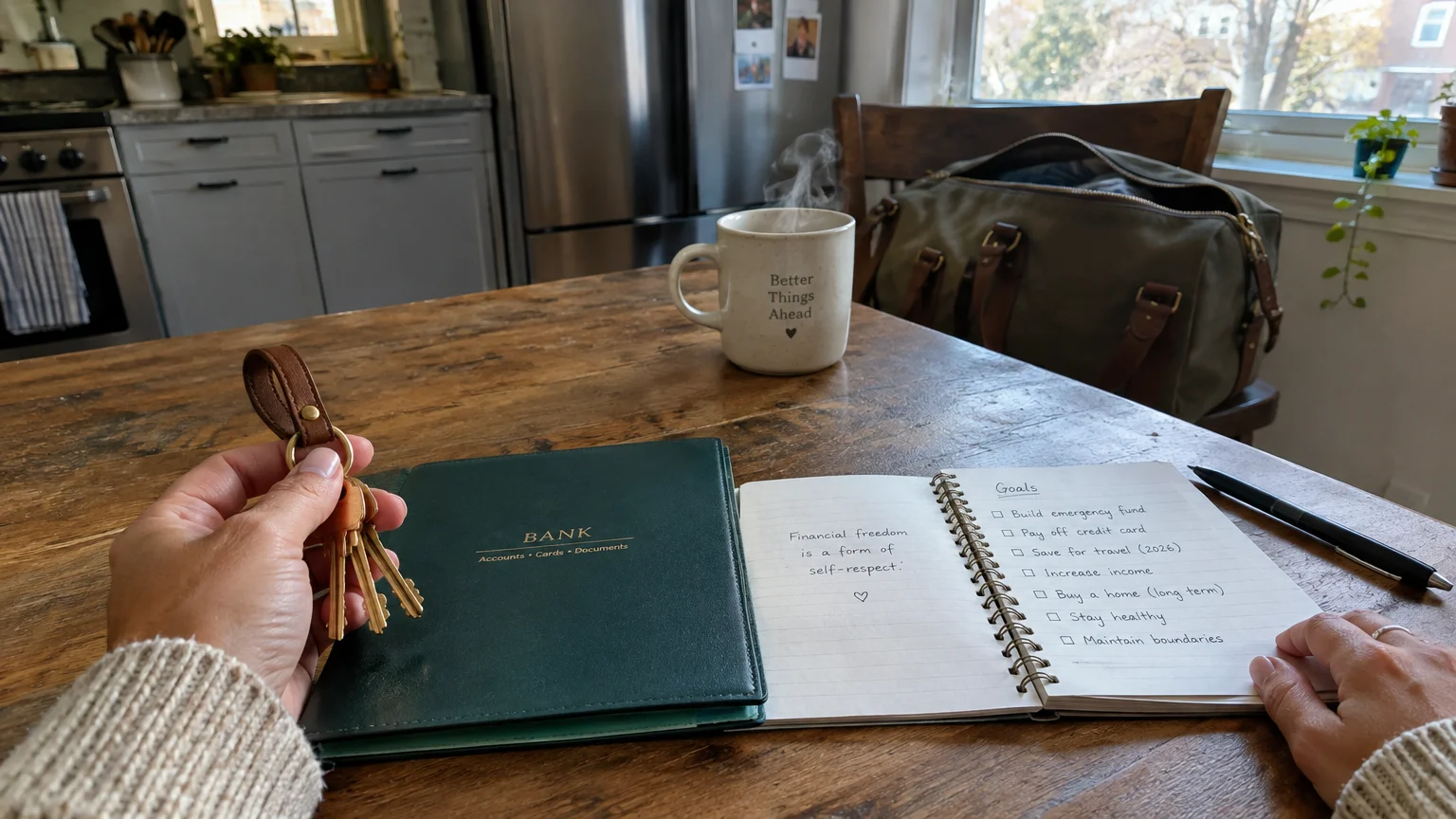
When your emotional safety is compromised, preparing a discreet exit plan is essential. Document your personal assets, secure vital paperwork, and reconnect with your trusted allies outside the home.
If you feel unsafe or controlled, confidential support is available 24/7 through the National Domestic Violence Hotline. Reaching out for professional assistance provides safety planning tailored to your unique circumstances.
Choosing to walk away from someone you love is painful, but abandoning yourself to stay is far more devastating.
Frequently Asked Questions
How can I maintain my independent friendships when falling hard for a new partner?
Block out recurring, non-negotiable friend dates on your calendar just as you would for professional meetings. Intentional scheduling ensures that romantic excitement does not displace the friends who anchor your life.
Communicate to your new partner early that maintaining vibrant social connections makes you a happier, more balanced partner. Healthy love welcomes your rich world instead of demanding exclusive possession of your time.
What online dating boundaries should I establish before meeting someone in person?
Keep private details such as your home address, specific workplace, and daily commute patterns confidential until trust is demonstrated. Always conduct a casual video call prior to meeting to confirm identity and establish basic rapport.
Arrange your own transportation to and from a public venue for initial dates, and inform a friend of your location. Setting these physical boundaries upfront establishes safety and mutual respect from the first encounter.
How can we navigate cross-cultural expectations without compromising self-respect?
Distinguish between embracing your partner’s cultural traditions and accepting gendered double standards that subordinate your autonomy. Mutual respect means both traditions and individual values receive thoughtful consideration.
Discuss cultural values openly early in the relationship, addressing how you each view gender roles, finances, and family involvement. Constructing shared relational norms together prevents future misunderstandings and resentment.
How do I voice my expectations early without seeming rigid or demanding?
State what you value through positive desires rather than a defensive checklist of rigid demands. Share your vision for a healthy partnership with openness and warmth.
Dialogue Example: “I thrive in relationships built on transparent communication, shared adventure, and equal effort.”
This invite-based approach allows the right person to step up naturally, while filtering out partners who cannot meet your standards.
Reclaiming Your Narrative and Moving Forward
Loving a man deeply does not mean you must surrender your dreams, silence your voice, or compromise your well-being. True love expands your capacity for joy; it never asks you to make yourself smaller.
Take one decisive step today by identifying a single area where you have been over-functioning or self-silencing. Communicate your needs with gentle firmness, knowing your worth is non-negotiable.
When you hold your boundaries with courage, you create room for an authentic partnership that honors the full reality of who you are.