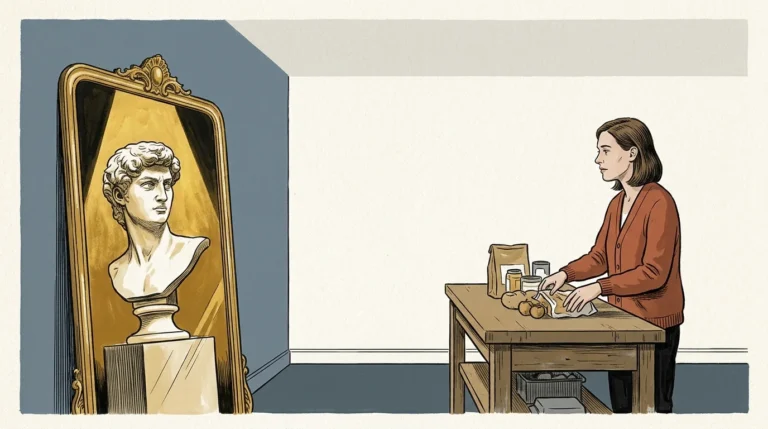
You sit across from your spouse at dinner, both scrolling through your phones in familiar silence. Knowing why people cheat in long marriages—and what therapists see most—can help you protect or repair your bond before quiet distance becomes betrayal.
Most affairs do not begin with a dramatic collapse; they grow inside years of unanswered bids for attention, unspoken resentment, and emotional drift. Whether you have been married a few years or several decades, recognizing those early cracks gives you real power to change course.
Understanding the clinical patterns behind marital infidelity turns fear into clear, practical action. Below, you will find research-backed truths, therapist insights, and concrete tools to rebuild honesty and closeness.
The State of Long-Term Marriage and What the Numbers Actually Show
Social media makes betrayal feel universal, yet actual marital infidelity rates tell a calmer story. A February 2025 poll by the Survey Center on American Life found that 57% of young women and 44% of young men believe cheating is very common.
That fear is partly fueled by over 350 million TikTok posts about cheating. Yet nationally representative data from the 2022 General Social Survey at NORC at the University of Chicago shows that 16% of ever-married adults report extramarital sex.
Across all adult age groups in that survey, roughly 20% of married men and 13% of married women report sexual infidelity. A 2024 meta-analysis in Personal Relationships by Warach and colleagues examined 305 studies across 47 countries and 508,241 participants.
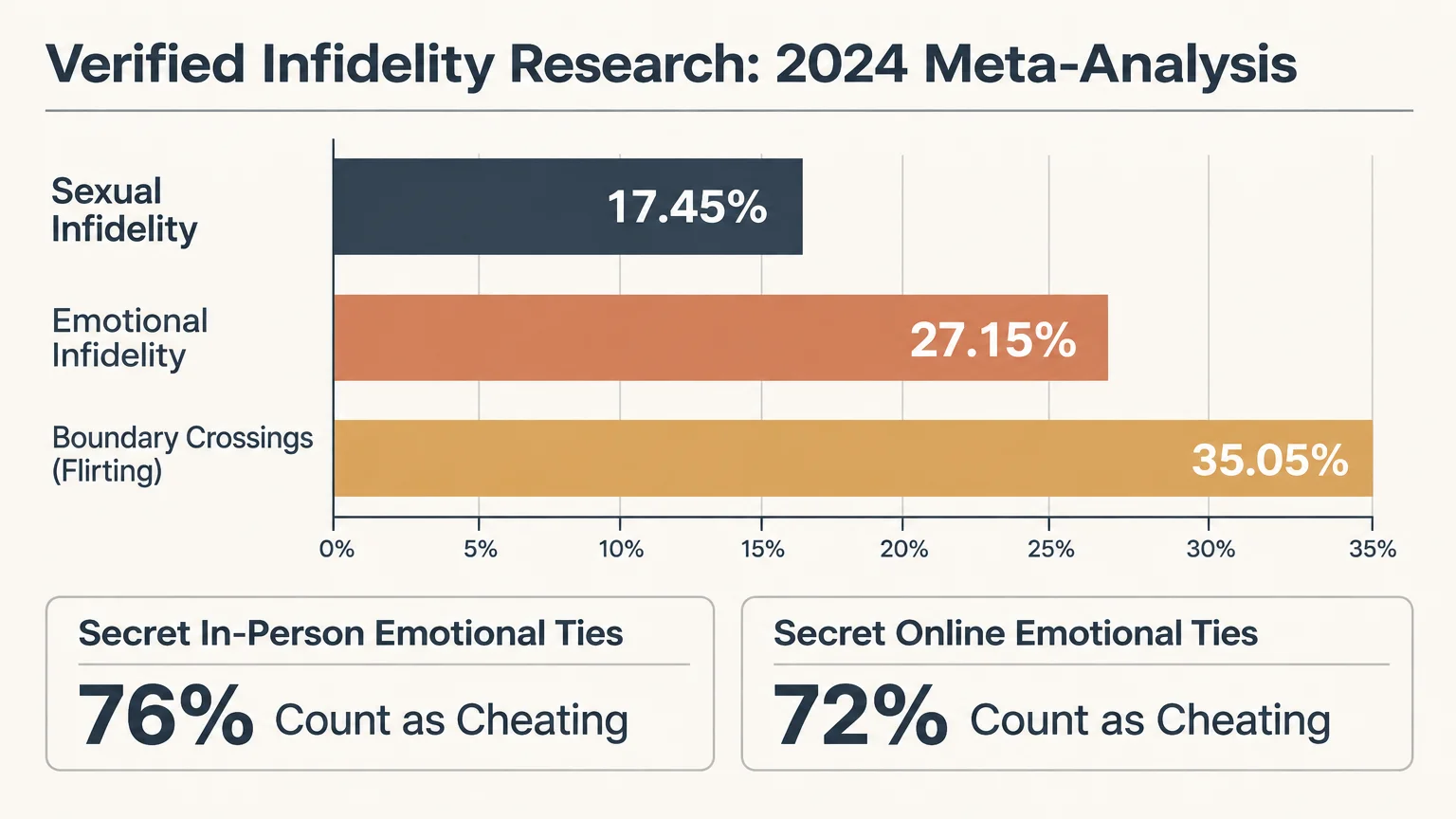
That global review found a 17.45% prevalence for sexual infidelity, roughly 25% among men and 14% among women. When researchers measured emotional infidelity—deep emotional bonds or falling in love outside marriage—the rate jumped to 27.15%.
Discrete non-sexual boundary crossings like flirting reached 35.05% in the same review. Most Americans count secret emotional ties as cheating.
In a 2024 national analysis of 2,000 adults by the Institute for Family Studies, 76% said a secret real-life emotional relationship counts as infidelity. Another 72% viewed a secret online emotional relationship the same way.
Public standards also shift around physical acts and gender. In a Survey Center on American Life poll, 88% of women and 73% of men classified kissing someone outside the relationship as cheating.
Meanwhile, a 2022 experiment by that same organization revealed a lingering double standard in judgment. Exactly 66% of Americans viewed a married man’s affair as always morally wrong, compared with 55% for a married woman.
Long-term marriages also show distinct age patterns because cumulative years create more opportunities for disconnection. A 2017 study by Wolfinger found that 20% of married adults over age 55 reported extramarital sex, compared with 14% under 55.
A 2018 Institute for Family Studies analysis of survey data showed infidelity peaking among women in their sixties at 16% before dropping later. For men, reported rates peaked in their seventies at 26% and stayed at 24% past age eighty.
At the same time, younger prime-age couples are actually cheating slightly less than previous generations did. An August 2025 analysis by Wang found that infidelity among married adults ages 25 to 54 fell from 17% in the 1990s to 13% in 2021–2022.
Within that prime-age group, 11% of men and 14% of women reported cheating, closing the traditional gender gap. Among ever-married young adults ages 18 to 29 in 2018 data, women slightly exceeded men at 11% versus 10%.
Even when rates hold steady, infidelity remains devastating to long-term stability. A 2003 study by Amato and Previti in the Journal of Family Issues identified infidelity as the single most commonly cited reason for divorce.
The August 2025 analysis also showed that roughly half of prime-age adults who ever cheated on a spouse were currently divorced or separated. Understanding how everyday drift turns into crisis helps you protect your marriage early.
Why People Cheat in Long Marriages: The Deeper Patterns
Rarely does a long marriage unravel over a single impulsive night. A 17-year longitudinal study of 1,475 people by Previti and Amato in 2004 proved that marital distress and infidelity feed each other in both directions.
Higher divorce proneness early on predicted later extramarital sex, which then lowered marital happiness and raised divorce odds even further. Infidelity is almost always both a symptom of chronic disconnection and a fresh wound.
Everyday Disconnection and Unanswered Bids
Long before someone crosses a boundary, small moments of emotional neglect pile up at home. Research from The Gottman Institute spanning over 40,000 couples predicts divorce with up to 94% accuracy based on daily interactions.
Six years into marriage, couples who stayed together turned toward their partner’s everyday bids for connection 86% of the time. Couples who eventually divorced turned toward those small bids only 33% of the time.
When you stop answering your partner’s quiet invitations to talk, laugh, or hold hands, loneliness settles into the house. Across straight, queer, and culturally diverse partnerships, chronic loneliness leaves partners vulnerable to outside validation.
The Eight Research-Backed Motives Behind Affairs
In a 2019 study of 495 adults published in The Journal of Sex Research, Selterman, Garcia, and Tsapelas mapped eight primary motives for cheating. Falling out of love or lacking love topped the list at 77%.
Desire for sexual variety followed closely at 74% and was cited more frequently by men. Feeling neglected by a partner motivated 70% of respondents and was cited more often by women.
Situational triggers such as alcohol or unexpected opportunity also accounted for 70% of affairs, appearing more often in men’s reports. Boosting low self-esteem drove 57%, anger or retaliation drove 43%, and low commitment drove 41%, alongside general sexual desire.
Crucially, the study revealed that your motive predicts how damaging an affair becomes. People driven by relationship deficits—like anger or unfulfilled love—had longer affairs, appeared in public more often with affair partners, and divorced at higher rates.
Those who cheated due to passing situational triggers had shorter affairs and lower breakup rates. Knowing whether an affair stems from chronic marital emptiness or poor personal boundaries shapes how you heal.
Career Stress, Status, and Personal History
Outside pressures also shape vulnerability inside long marriages, especially when partners stop sharing their inner stress. In the August 2025 analysis of adults ages 25 to 54, career prestige showed opposite patterns by gender.
Men in high-prestige jobs like executives or physicians cheated at 18%, compared with 7% in upper-middle-prestige roles and 13% in low-prestige jobs. For women, cheating was 21% in low-prestige jobs versus 9% in high-prestige careers.
Job loss and education also played measurable roles in that same data. Unemployed prime-age men cheated at roughly one in five compared with 11% of employed men, while college graduates cheated less than non-graduates at 10% versus 15%.
Prior relationship patterns matter as well, though they never seal your fate. A 2019 survey of 1,001 adults found marital infidelity rates of 11% among those with four or fewer lifetime sexual partners versus 21% with five or more.

What Therapists See Most When Couples Finally Seek Help
By the time partners walk into a counseling office, pain has usually lived in their home for years. Research from The Gottman Institute shows the average couple waits six years before seeking professional help.
During those six years, unaddressed hurts harden into defensiveness, contempt, and silent withdrawal. In clinical practice, therapists rarely see an affair as the first problem; they see it as the alarm bell that finally forces honesty.
The Three Biggest Roadblocks Inside Therapy
In 2022, Irvine and Peluso surveyed 351 couple therapists in The Family Journal about treating infidelity. Clinicians identified three major couple-level barriers that stall recovery most often.
The first barrier is an inability to let go of blame and anger as treatment unfolds. Valid grief is essential early on, yet endless punishment keeps both partners trapped in a courtroom instead of a healing space.
The second barrier is ongoing betrayal or continued secrecy while attending couples sessions. You cannot rebuild a roof while someone is still lighting matches in the attic.
The third barrier is trauma-like symptoms in the betrayed partner, including intrusive flashbacks and exhausting hypervigilance. Discovering an affair shatters your sense of safety, triggering nervous-system alarm bells long after the affair ends.
Clinicians themselves also face real pitfalls when guiding hurt couples through betrayal. Clinical reviews note that practitioners often struggle with countertransference and over-identifying with either the hurt or unfaithful spouse.
Why Full Disclosure Beats Keeping Secrets
Many partners hide an affair to spare their spouse pain, yet secrecy silently poisons therapy. A clinical trial by Atkins and colleagues in 2005, followed five years later by Marín and colleagues through the American Psychological Association, tested this directly.
Couples who disclosed an affair started therapy more distressed than non-affair couples, yet they actually improved faster during treatment. Five years after therapy, married couples who worked through a disclosed affair matched non-affair distressed couples in satisfaction.
Conversely, keeping an active or past affair hidden undermined therapy outcomes from the start. Gottman Method clinical reporting notes that 73% of marriages were saved following an affair.
Staying legally married is only the floor; genuine healing means building a safer, more honest partnership than the one you had before.

Three Evidence-Backed Repair Strategies With Real Dialogue
Insight alone never repairs a weary marriage; daily habits do. Whether you are recovering from betrayal or preventing drift, these three clinical practices rebuild emotional safety and practical teamwork.
1. Build Daily Rituals of Connection
Affairs thrive in emotional starvation, so your first line of defense is turning toward your partner every single day. Set aside twenty uninterrupted minutes each evening for a stress-reducing conversation about life outside your household.
Listen without fixing, lecturing, or checking notifications while your spouse vents about work, extended family, or aging parents. For LGBTQ+ or multicultural couples navigating external bias or family pressure, this ritual becomes a vital sanctuary.
Partner A: My manager cut my hours again today, and I feel invisible at work.
Partner B: That sounds exhausting and unfair; tell me more about what happened in that meeting, because I am right here with you.
Notice how Partner B validates the emotion before offering advice. Small moments of reliable attunement starve outside temptations of oxygen.
2. Use Structured Scripts for Perpetual Problems
Many couples cheat after convincing themselves they married the wrong person because the same fights keep returning. The Gottman Institute reports that 69% of marital conflicts are perpetual problems rooted in core personality differences, while only 31% are solvable.
Your goal is not to erase differences around sex drive, tidiness, or social energy; your goal is gentle dialogue without contempt. Use a softened startup and a clear repair script when tensions rise.
Partner A: I notice we are stuck on our old dynamic around weekend plans, and I feel lonely when we stay silent. Can we pause for ten minutes and revisit what each of us actually needs?
Partner B: You are right that I was pulling away, and I do not want us to freeze up. Give me ten minutes to breathe, and then let us talk about balancing rest and time together.
Scripts like this interrupt escalation before stonewalling takes over. Over time, both partners learn that hard topics will not destroy the bond.
3. Establish Radical Financial and Digital Transparency
Secret spending, hidden debt, and private online messaging often walk hand in hand with emotional affairs. Financial transparency removes shame and prevents silent resentment over invisible household labor or unequal spending power.
Hold a calm thirty-minute money and boundary check-in once a month with shared visibility into accounts, subscriptions, and work travel stress. Clear agreements protect partners across different income levels, cultural norms around supporting relatives, and blended-family obligations.
Partner A: I felt anxious seeing an unfamiliar charge and realized I started imagining worst-case stories instead of asking you. Can we review our accounts together tonight so neither of us carries quiet suspicion?
Partner B: Thank you for coming straight to me instead of stewing. Let us open the statements together right now, and I want you to have full access whenever you need reassurance.
Transparency is not about policing your partner forever; it is about offering open hands until trust feels solid again.
Your 30-Day Plan to Rebuild Honesty and Closeness
You do not need to solve years of marital history by Friday. Breaking repair into four focused weeks gives your nervous system structure while replacing guesswork with steady action.
Week 1: Stabilize the Crisis and Commit to Honesty
If infidelity occurred, Week 1 requires ending all contact with the affair partner completely and transparently. Share a clear, compassionate timeline of basic facts without cruel graphic details that worsen trauma.
If you are addressing distance before an affair happens, use Week 1 to name the loneliness out loud without blame. Agree on two daily phone-free windows—one brief check-in each morning and a longer conversation at night.
Week 2: Relearn Emotional Attunement
During Week 2, practice turning toward small daily bids from your partner throughout the day. Respond warmly to comments about the weather, a funny message, or a sore back.
When the hurt partner experiences a wave of panic or hypervigilance, practice staying present instead of getting defensive. Saying you understand why they feel scared calms the alarm far faster than arguing over timelines.
Week 3: Map Your Triggers and Hidden Needs
Use Week 3 to examine the deeper voids beneath your distance, such as feeling unappreciated, sexually rejected, or overwhelmed by parenting and eldercare. Talk honestly about how stress, alcohol, or work isolation lowers your guard.
Sit down together for your first structured financial and calendar review without multitasking. Decide together how much solo downtime, friend time, and family obligation each of you needs to stay grounded.
Week 4: Design Long-Term Guardrails and Intimacy
In Week 4, write down three shared boundaries around digital privacy, work friendships, and conflict pauses. Keep those rules mutual so neither spouse feels like a warden or a child.
Reintroduce low-pressure physical affection—warm hugs, holding hands on walks, or non-sexual touch—before rushing back into expectations around sex. Schedule a monthly state-of-the-marriage check-in on your calendar for the year ahead.

Essential Safeguards and Knowing When to Seek Counseling
Good intentions collapse quickly without clear guardrails around time, technology, and outside friendships. Remember that roughly three out of four Americans classify secret real-life or online emotional attachments as cheating.
Healthy Boundaries Without Surveillance
A strong boundary protects the marriage from secrecy while honoring each partner’s dignity as an adult. Agree never to vent about marital frustrations to a coworker or attractive acquaintance who offers easy sympathy.
Keep messages, social media direct messages, and work-trip routines open enough that you would feel comfortable reading them aloud with your spouse beside you. Early openness stops small crushes before they turn into emotional affairs.
When to Call a Specialized Couples Therapist
Do not wait six years while resentment quietly calcifies inside your home. Seek professional support immediately if you face an active or newly discovered affair, intrusive trauma flashbacks, or frozen silence that lasts for days.
When choosing a clinician, training makes a measurable difference in your odds of recovery. In the 2022 therapist survey by Irvine and Peluso, clinicians with specialized infidelity training, doctoral degrees, and 16 or more years of licensure reported the highest success.
You can search for licensed, affair-informed relationship specialists through the American Association for Marriage and Family Therapy directory. Ask prospective therapists directly how they handle disclosure, trauma symptoms, and staying balanced between both spouses.
Also seek immediate individual safety support rather than couples therapy if emotional abuse, intimidation, or physical violence is present. Repair requires safety first, and no marriage tool works inside an unsafe environment.
Frequently Asked Questions About Infidelity and Repair
How do we rebuild physical and emotional intimacy after years of drift or an affair?
Start by separating emotional safety from sexual performance so neither partner feels pressured or rejected. Rebuilding trust through daily attunement and non-sexual affection—like warm hugs and uninterrupted listening—creates the safety required for real desire to return.
Talk openly about what kind of touch feels comforting versus triggering right now. Many long-married couples discover deeper, more honest intimacy after repair than they ever had during years of polite avoidance.
Does financial secrecy count as betrayal, and how do we fix money resentment?
Secret credit cards, hidden debt, or undisclosed financial gifts to relatives erode trust in the exact same way a secret romance does. Both rely on deception and leave the other partner feeling foolish and unsafe.
Fix money resentment by bringing every account, loan, and financial goal onto one shared table without shaming each other. Pair transparency with an agreed monthly personal spending allowance so both partners keep fair autonomy.
How can exhausted parents stay connected so child-rearing does not invite distance?
Raising children easily turns spouses into stressed business partners who only discuss carpools, chores, and bedtime schedules. When all your energy goes toward parenting, feeling neglected—cited by 70% of cheating respondents—quietly takes root.
Protect your bond by holding a brief adult-only check-in after bedtime where logistics and kid problems are strictly off-limits. Regular walks or coffee dates together remind you that you are lovers, not just co-parents.
How long does rebuilding trust take, and can a marriage truly recover?
Real trust rarely snaps back overnight; meaningful healing takes sustained time, consistent honesty, and deep patience.
Yet the five-year APA follow-up by Marín and colleagues found that couples who disclosed and worked through affairs did not differ significantly from distressed non-affair couples in long-term satisfaction.
Recovery depends less on erasing the past and more on daily proof that secrecy is over. When the unfaithful partner welcomes hard questions with patience, trust steadily regrows.

A Shared Commitment Exercise for Tonight
Before you go to sleep tonight, sit knee-to-knee with your partner for a few quiet minutes without phones or distractions. Take turns finishing two honest sentences aloud with warmth and zero defensiveness.
First, name one small way your partner showed up for you this week that you truly appreciated. Second, share one small, specific thing you want to do together tomorrow to stay close.
Long marriages rarely break because two people stopped caring all at once; they fray when small moments go unguarded. Choosing honesty, curiosity, and daily repair tonight is how you turn a long marriage into a lasting home.