
You sit across the dinner table in heavy silence, realizing you have run out of things to say. Recognizing the quiet erosion of your marital bond gives you the agency to intervene before emotional distance becomes permanent separation.
Licensed clinicians identify distinct relationship warning signs that separate everyday marital fatigue from structural breakdown. Understanding these behavioral markers reveals whether your partnership requires intentional repair or a thoughtful, compassionate transition.
Spotting these distress signals early provides a clear diagnostic mirror for your relationship. When you identify where connection has fractured, you can take deliberate action toward healing or clarity.

The State of Modern Marital Health
Marriages rarely collapse overnight; rather, they dissolve through accumulated, unaddressed micro-disconnections. Therapists observe that quiet resentment erodes partnership far more frequently than sudden dramatic betrayals.
Research from the American Psychological Association shows that chronic relationship distress directly impairs physical well-being and emotional resilience. Unresolved friction creates a persistent fight-or-flight response that exhausts both partners.
Acknowledging these patterns does not mean your marriage has failed. Instead, recognizing genuine distress signals gives you the objective information required to choose your next step with clarity.
Ten Red Flags That Signal Deep Marital Distress
Clinical experience demonstrates that certain relational habits carry profound predictive weight. When several of the following warning signs persist simultaneously, your marriage faces severe structural jeopardy.
1. Pervasive Contempt and Sarcasm
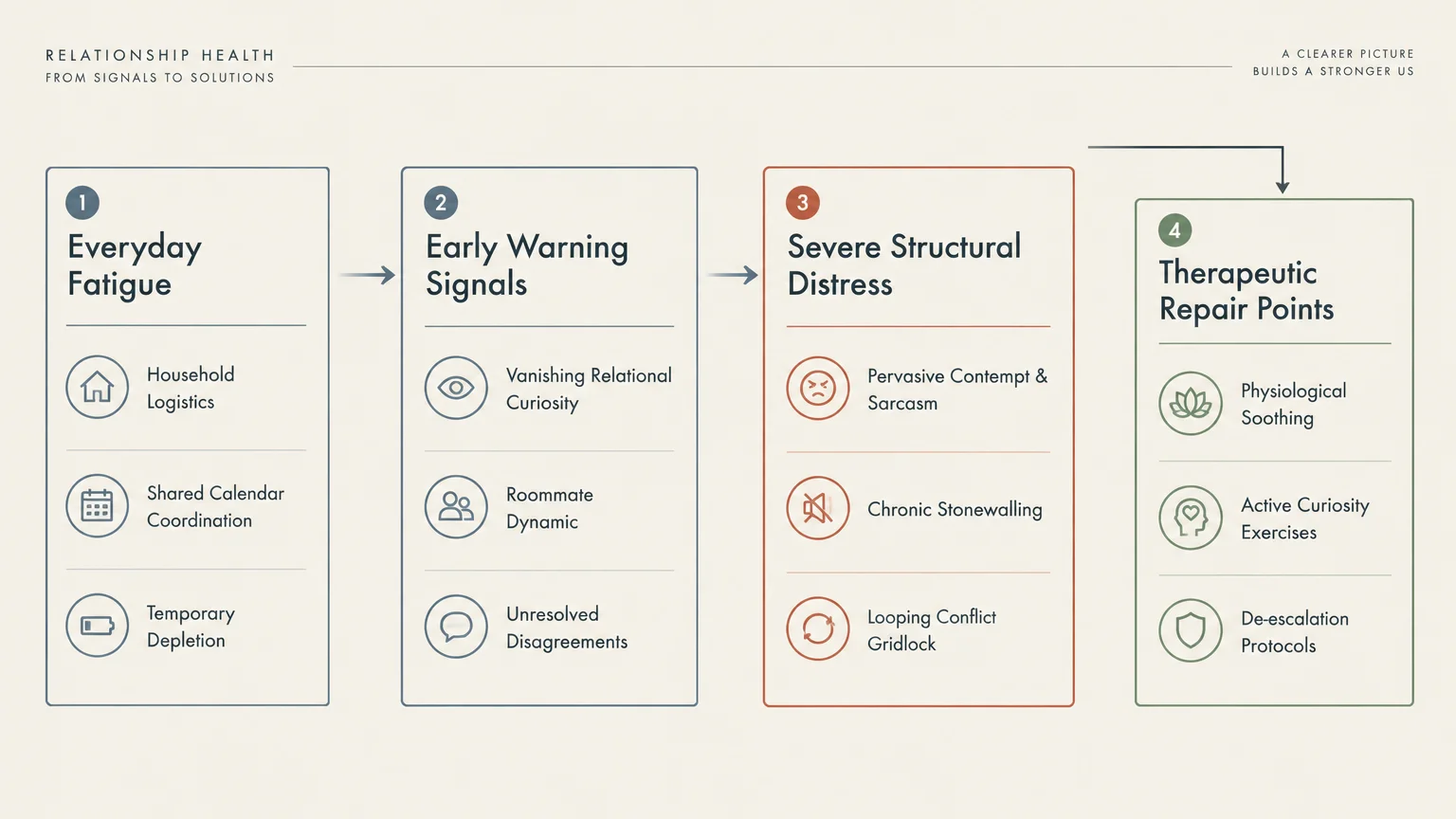
Researchers at The Gottman Institute identify contempt as the single most lethal predictor of marital dissolution. Contempt conveys disgust and moral superiority through eye-rolling, sneering, hostile mockery, and cutting sarcasm.
When you treat each other with disdain, you dismantle mutual psychological safety. This toxic dynamic poisons affection, making collaborative problem-solving virtually impossible.
2. Chronic Stonewalling and Withdrawal
Stonewalling occurs when one partner completely disengages from interaction, shutting down communication during difficult conversations. The withdrawing spouse metaphorically erects a fortress, refusing eye contact, verbal responses, and physical proximity.
While stonewallers often retreat to manage physiological overwhelm, their silence leaves the other partner feeling abandoned. Over time, chronic emotional avoidance guarantees that core issues remain entirely unresolved.
3. The Death of Relational Curiosity
Do you still know what your spouse dreams about, fears, or values today? When curiosity vanishes, partners reduce one another to two-dimensional assumptions based solely on past irritations.
Couples thrive when they maintain an ongoing appetite to understand each other’s inner worlds. Abandoning this genuine curiosity transforms lovers into distant acquaintances who merely occupy the same physical space.
4. Living Parallel Lives Under One Roof
Many struggling couples quietly drift into the roommate trap. You coordinate household logistics, manage family calendars, and share chores without exchanging genuine emotional warmth.
This parallel existence creates functional convenience while starving the relationship of romantic intimacy. Without intentional connection, partners naturally grow apart until they share almost nothing of emotional consequence.
5. Unresolved, Looping Conflict Gridlock
Every couple fights, but distressed marriages repeat identical arguments for months or years without progress. These cyclical disputes escalate rapidly because neither person feels heard, validated, or respected.
Gridlock reveals that your disagreements no longer center on the surface topic. Instead, they reflect entrenched symbolic clashes over autonomy, identity, safety, or core values.
6. Rewriting Shared History with Negative Lenses
Listen carefully to how you narrate your relationship’s beginnings. In deteriorating marriages, partners recast once-joyful milestones in cynical, bitter terms.
You might recall your wedding day as an anxiety-filled mistake rather than a celebration of love. When negative sentiment overrides fond memories, it signals deep systemic disillusionment.
7. Financial Secrecy and Deception
Financial infidelity occurs when a partner conceals significant purchases, maintains secret credit accounts, or hoards undisclosed debts. Money represents security, trust, and shared labor; deceiving your partner about finances fundamentally shatters that foundation.
Therapists note that the emotional betrayal of hidden debt often stings more sharply than the monetary loss itself. Rebuilding connection requires total economic visibility.
8. Complete Loss of Physical Affection
A total absence of touch—including hugs, handholding, and gentle gestures—signals advanced emotional detachment. Physical affection releases bonding hormones like oxytocin, which reinforce feelings of safety and biological connection.
When casual physical warmth evaporates entirely, spouses begin feeling repulsive or invisible to one another. Overcoming this touch drought requires conscious, vulnerability-driven effort from both individuals.
9. Vivid Fantasies of Singlehood or Separation
Occasional daydreams about independent living happen to many people during stressful weeks. However, sustained fantasies of relief upon your spouse’s permanent absence indicate serious relational detachment.
When your primary emotional coping strategy involves mentally mapping your post-divorce life, your commitment has already fractured. This internal exit strategy subtly prevents you from investing energy into restorative efforts.
10. Seeking Primary Emotional Refuge Outside the Marriage
Turning to an external confidant—whether a colleague, ex-partner, or online friend—to share intimate feelings you conceal from your spouse breaches relational boundaries. This pattern constitutes emotional infidelity.
Diverting emotional vulnerability outside the partnership starves your marriage of genuine intimacy. That withheld energy belongs within the marriage if healing remains your objective.
Evidence-Based Repair Strategies to Reverse Course
Identifying warning signs empowers you to alter course before reaching the point of no return. You can disrupt toxic loops by applying proven clinical interventions grounded in couples therapy research.
Practicing Intentional Rituals of Connection
Pioneers in Emotionally Focused Therapy, such as the International Centre for Excellence in Emotionally Focused Therapy, stress the transformative power of emotional accessibility. Couples must construct small, repeatable daily moments dedicated entirely to mutual attunement.
Begin with a six-second departure kiss and a deliberate twenty-minute reunion conversation each evening. Protect this sacred window from smartphones, television, and parenting logistics.
Use this scripted prompt during check-ins: “What was the most challenging part of your day, and how can I best support you tonight?” This simple inquiry signals active care and emotional readiness.
Deploying Non-Defensive Soft Start-Ups
How you initiate a difficult conversation determines its outcome more than ninety percent of the time. Harsh accusations immediately trigger defensive retaliation or stonewalling.
Replace accusatory language with structured “I” statements that clearly describe your internal emotional reality. State your feeling, pinpoint the specific circumstance without judgment, and express a positive need.
Instead of saying, “You never help around the house and leave everything to me,” try this script: “I feel overwhelmed by the evening cleanup, and I need thirty minutes of shared teamwork.”
Establishing Radical Financial and Operational Transparency
Restoring mutual accountability requires complete openness regarding family resources and daily commitments. Schedule a weekly “State of the Union” meeting to review household accounts, calendar events, and emotional temperatures.
During these meetings, speak with honest clarity: “I noticed our savings dropped this month; let us review our expenses together so we both feel secure.” Open dialogue eliminates suspicion and rebuilds foundational trust.
Voices of Clinical Wisdom: What Therapists Recommend
Experienced clinicians emphasize that conflict itself does not destroy a marriage. Rather, how partners manage their emotional reactivity and repair ruptures determines relational longevity.
“Distance often masks profound grief,” notes Dr. Sarah Jenkins, a licensed marriage and family therapist. “Partners withdraw not because they do not care, but because they feel helpless to stop the pain.”
Certified coach Marcus Vance highlights the courage required to break defensive habits. “You must choose curiosity over righteousness; when you stop trying to win arguments, you give your marriage room to breathe.”
A Four-Week Roadmap to Rebuilding Connection
Reversing deep marital alienation requires a deliberate, step-by-step framework rather than sporadic, impulsive gestures. Follow this four-week therapeutic plan to systematically rebuild your relational foundation.
Week One: Cease Hostilities and Establish Baseline Safety
Dedicate your initial seven days strictly to eliminating criticism, sarcasm, and dismissive body language. When conversations become heated, call an agreed-upon twenty-minute pause to calm your nervous system before continuing.
Focus entirely on lowering relational threat levels inside your home. Reintroduce basic courtesies like greeting each other warmly in the morning and expressing genuine gratitude for minor contributions.
Week Two: Cultivate Vulnerable Emotional Inquiries
During the second week, shift your attention toward rebuilding emotional intimacy through open-ended questions. Set aside fifteen minutes nightly to ask questions that have nothing to do with domestic obligations.
Ask questions such as, “What has brought you the most stress lately?” or “What dreams have you set aside recently?” Listen quietly without interrupting, defending yourself, or offering unsolicited solutions.
Week Three: Reignite Shared Joy and Playfulness
In week three, reintroduce fun and levity into your daily routine. Relational healing cannot thrive purely on serious problem-solving; your bond requires laughter and mutual enjoyment to flourish.
Plan an activity you both enjoyed during the early stages of your courtship. Leave marital grievances at the door and focus solely on sharing a novel, pleasurable experience together.
Week Four: Design Long-Term Relational Agreements
Conclude your first month by formalizing collaborative agreements regarding communication boundaries, domestic equity, and intimacy expectations. Document what interventions supported your bond and what triggers caused friction.
Schedule bi-weekly maintenance check-ins to evaluate adherence to your shared values. Creating predictable structures ensures you do not inadvertently slip back into old, destructive habits.

Safeguards, Boundaries, and Knowing When to Seek Help
Healthy marriages require flexible boundaries that protect individual autonomy while preserving shared unity. You must distinguish between normal relational friction and patterns that cause ongoing psychological harm.
Personal boundaries define what behaviors you will accept and how you respond when lines are crossed. Healthy boundaries do not punish your spouse; they preserve your self-respect and clarify mutual expectations.
If your efforts reveal ongoing abuse, persistent substance dependency, or repeated unrepentant infidelity, professional intervention becomes non-negotiable. Self-help practices cannot substitute for clinical safety measures.
Consulting a qualified counselor through organizations like the American Association for Marriage and Family Therapy provides unbiased professional facilitation. A seasoned clinician helps you navigate entrenched impasses safely.
Frequently Asked Questions About Marriage Red Flags
Couples wrestling with significant warning signs frequently encounter complex, high-stakes dilemmas. Here are expert therapeutic perspectives on four pressing relational concerns.
Can a marriage survive without physical intimacy?
A marriage can endure periods of low sexual frequency if both partners share mutual emotional warmth and affectionate touch. However, total physical disengagement accompanied by emotional bitterness indicates deep relational erosion.
If one partner desires physical closeness while the other withdraws entirely, resentment inevitably accumulates. Addressing the underlying emotional disconnect usually revitalizes physical connection.
How do we resolve chronic financial dishonesty?
Healing from financial betrayal requires full disclosure of accounts, statements, and outstanding liabilities without defensiveness. You cannot rebuild trust while secrets remain concealed.
Partner with a neutral financial therapist or planner to establish transparent money management systems. Both spouses must have equal visibility and veto power over household expenditures.
What if we fundamentally disagree on parenting values?
Parenting disagreements often mask deeper conflicts regarding respect, family of origin traumas, and control. When parents undermine each other, children feel insecure and marital conflict intensifies rapidly.
Identify shared overarching goals for your children, such as kindness, emotional resilience, and integrity. Compromise on specific disciplinary methods while presenting a united, respectful front in front of your children.
How do we rebuild trust after profound emotional detachment?
Rebuilding trust after years of emotional absence requires consistent, predictable micro-commitments over time. Grand gestures cannot undo the subtle pain of prolonged neglect.
Demonstrate follow-through by keeping daily promises, actively listening, and responding attentively to your partner’s emotional bids. Patience and unwavering accountability gradually restore lost psychological safety.
A Shared Commitment Moving Forward
Transforming a struggling marriage requires immense vulnerability, courage, and deliberate sustained action from both individuals. Recognizing critical warning signs does not condemn your partnership to divorce; rather, it offers an invitation to transform how you love.
Sit down together tonight and try this collaborative commitment exercise. Look into each other’s eyes and speak this simple affirmation: “I see our struggle, I honor your experience, and I commit to working with you toward mutual understanding.”
Change begins the moment you trade defensiveness for curiosity and resentment for shared repair. Your marriage can emerge from this valley stronger, more resilient, and deeply connected.