The phone buzzes face-down on the kitchen counter at midnight, and your stomach drops before you even read the message. In seconds, the quiet distance you have felt for months snaps into sharp, painful focus.
What you do in the hours after discovering an affair shapes whether your relationship heals or fractures further. Following grounded infidelity advice keeps raw panic from dictating your future.
Research-backed therapist advice after an affair gives you and your partner clear guardrails right now. These seven boundaries protect your nervous system, clarify accountability, and lay the groundwork for genuine marriage recovery.
The State of Infidelity and Trauma Today
You may feel completely blindsided, yet infidelity affects more committed partnerships than most people realize. Three decades of General Social Survey data show roughly 16% of ever-married Americans report extramarital sex, with 2% to 4% of spouses doing so each year.
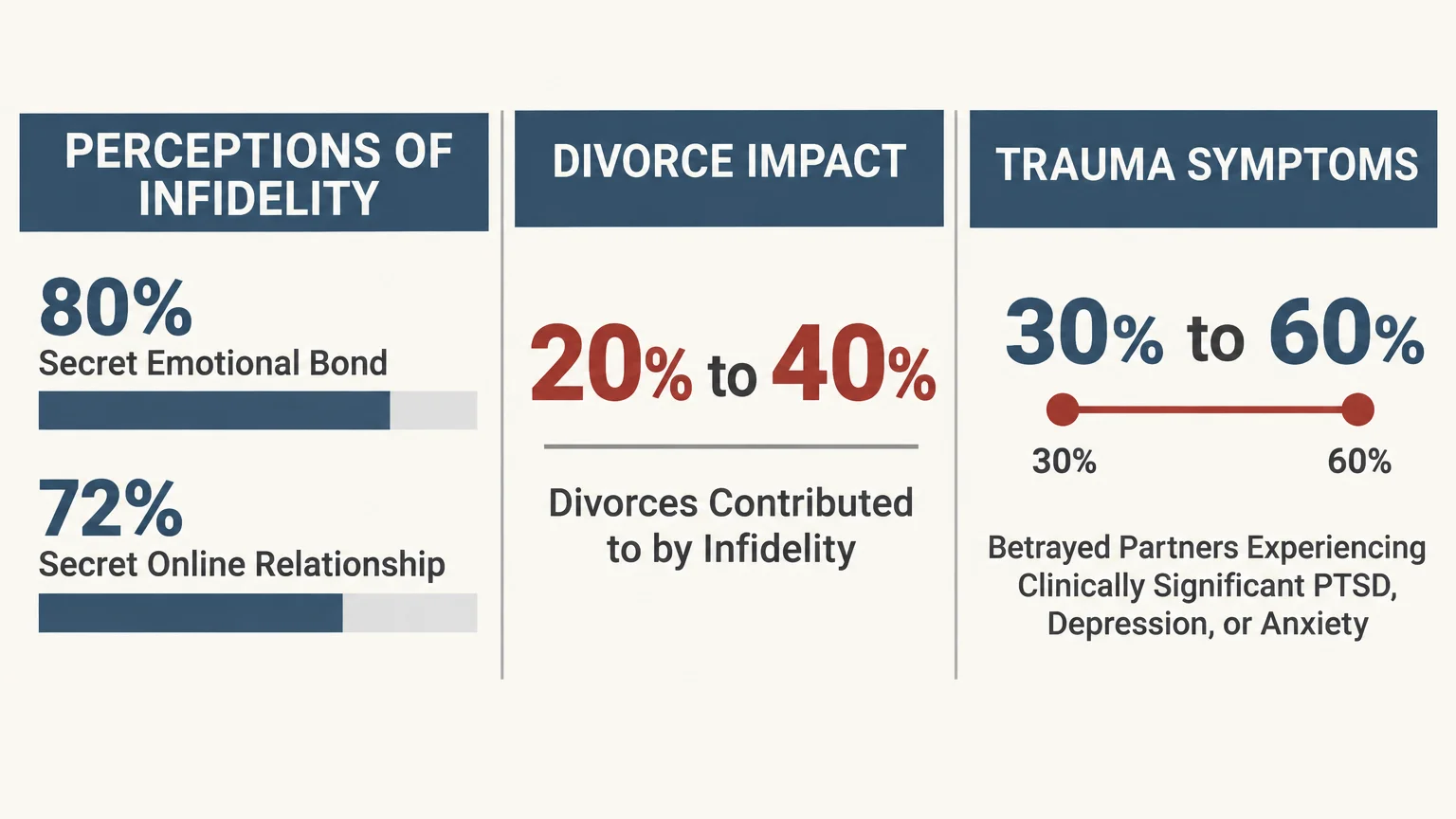
Modern betrayal also extends well beyond physical contact for couples of all genders and backgrounds. Institute for Family Studies survey data reveal that 80% of married respondents view a secret in-person emotional bond as cheating, and 72% consider a secret online relationship infidelity.
According to the American Psychological Association and long-term research summaries, infidelity contributes to 20% to 40% of divorces. Peer-reviewed studies also show that 30% to 60% of betrayed partners experience clinically significant symptoms of PTSD, depression, or anxiety.
Seven Things Therapists Say Not to Do After Discovering an Affair
Acute betrayal trauma puts your brain into fight-or-flight mode, making impulsive choices feel urgent. Stepping away from these seven common traps protects your emotional safety while you decide what comes next.
1. Don’t Make Permanent Legal Decisions in Shock
Packing bags or filing divorce papers within the first week often stems from panic rather than clarity. Therapists urge you to pause major legal, housing, and financial moves until your nervous system settles.
Taking time to breathe does not force you to stay with a cheating spouse. It simply ensures you make life-altering choices with clear eyes instead of acute shock.
2. Don’t Demand Graphic Sexual Details
Wanting the full timeline makes sense when you are trying to piece together lost reality. However, infidelity researcher Dr. Shirley Glass and clinicians at The Gottman Institute warn against asking for explicit sexual descriptions.
Knowing specific acts or intimate locations fuels intrusive flashbacks and worsens trauma symptoms. Ask factual questions about dates, emotional meaning, and whether outside contact has truly ended instead.
3. Don’t Blame the Marriage Before Accountability Happens
Early marriage recovery fails fast when partners rush to dissect past communication habits or bedroom routines. Under the Gottman Trust Revival Method, examining pre-existing relationship struggles belongs in the second phase, Attune, never the first phase, Atone.
The unfaithful partner carries 100% responsibility for crossing the boundary, regardless of prior marital loneliness. In a 2026 Journal of Sex and Marital Therapy study, 93% of married or engaged couples stayed together when the unfaithful partner answered questions and blocked contact.
4. Don’t Skip Medical Testing or Safety Checks
Protecting your physical health is a non-negotiable step right after disclosure.
The Centers for Disease Control and Prevention recommends chlamydia and gonorrhea screening for sexually active women at increased risk, which includes having a partner with concurrent sexual partners, along with HIV testing and risk-based syphilis screening.
Wait out full detection windows before assuming a negative test is final. Chlamydia and gonorrhea show up within one to two weeks, whereas HIV antibody tests require 23 to 90 days for reliable results.
Equally urgent, couples counseling is unsafe if discovery triggers physical violence, stalking, coercive control, or self-harm threats. Call 911, call or text 988, or reach the National Domestic Violence Hotline at 1-800-799-7233 if you face immediate danger.
5. Don’t Pull Your Children Into the Conflict
Leaning on children or teenagers for comfort turns them into emotional caretakers, a pattern therapists call parentification. Research links parentification to lasting anxiety, depression, and strained adult relationships.
Offer age-appropriate honesty without adult details, blame, or requests to keep secrets. Reassure young children they are safe and loved, and give teens a calm, non-graphic acknowledgment if tension shows.
6. Don’t Expect Quick Fixes or Keep Secrets in Therapy
Stabilizing trust often takes 12 to 24 months, while full marriage recovery spans 2 to 5 years. Many couples hit an unexpected second wave of grief around three to six months post-discovery.
Hiding an ongoing affair while attending counseling destroys any chance at repair. A five-year clinical follow-up found 57% of couples who disclosed an affair stayed married with healthy satisfaction, compared to an 80% divorce rate when secrets persisted.
7. Don’t Isolate Yourselves Instead of Seeking Skilled Help
Research cited by the American Association for Marriage and Family Therapy shows couples wait an average of six years before starting counseling. Waiting silently lets resentment harden into contempt.
Therapy works far better than carrying your pain alone. Over 75% of couples report improvement after therapy, and Emotionally Focused Therapy documented by ICEEFT achieves a 70% to 73% recovery rate from relationship distress.
In the U.S., 12 therapy sessions average $2,070 to $2,400, with private specialists charging $150 to $350 per visit and sliding-scale clinics charging $20 to $80. That investment is a fraction of the $11,300 to $30,000 average cost of divorce.
Three Evidence-Backed Repair Strategies With Example Dialogue
Stopping destructive habits clears space for deliberate, daily repair. These three structured practices help LGBTQ+ and straight couples alike replace panic with predictable teamwork.
Daily Rituals of Connection
Schedule a 20-minute check-in each evening that stays completely free of affair interrogation, household logistics, or screens. Hold hands, sit near each other, and share one honest feeling about your day.
You can open by saying, I feel drained after work today, and I just need ten minutes of quiet presence with you. Consistent micro-moments rebuild emotional safety alongside deeper trauma work.
Trigger and Conflict Scripts
Intrusive memories will ambush the hurt partner during ordinary errands, songs, or late nights. Having a rehearsed conflict script keeps a sudden trigger from turning into an hours-long fight.
When triggered, you can say, My chest feels tight because that street reminded me of the timeline; can you sit with me for five minutes?
Your partner can reply without defensiveness, I am right here, I am sorry my choices hurt you, and I am listening.
Radical Financial and Digital Transparency
Secrecy around money, phones, or work travel keeps hypervigilance alive. Agreeing to shared bank visibility, clear spending alerts, and open calendar access removes hidden spaces where anxiety grows.
Say directly, I want us to review our credit card statements together every Sunday so neither of us carries hidden stress. Transparency is not forever policing; it acts as temporary scaffolding while trust heals.
Your Season-Long Rebuilding Roadmap
During your first 30 days, prioritize physical safety, full medical testing, and strict no-contact boundaries with the outside person. Keep conversations structured, lean on trusted individual support, and book an intake with a trained couples therapist.
Across months two through six, shift from crisis management into steady Attune work using Gottman or EFT frameworks. Expect emotional waves around month three, and practice answering lingering questions without defensiveness or blame-shifting.
From month six through year two and beyond, move into the Attach phase by creating new shared rituals and values.
Remember that University of Denver research found people who cheated in one relationship were three times more likely to cheat in their next, so keep nurturing honest communication.
Frequently Asked Questions About Infidelity Recovery
When should physical intimacy resume after an affair?
Wait until both partners receive clear medical test results and the betrayed partner feels emotionally safe enough to choose closeness. Rushing sex to prove the marriage survived often deepens distress, whereas slow, consensual affection rebuilds genuine connection.
How do we handle joint finances during recovery?
Pause major asset splits early on, yet immediately audit shared accounts for any money spent on the affair. Schedule calm weekly money check-ins to restore transparency and ensure both partners share equal visibility into household cash flow.
What should we tell our kids to protect parenting alignment?
Agree privately on a unified, brief explanation before speaking to your children together. Tell younger kids that grown-up stress is not their fault, and assure teens that both parents remain committed to showing up for them.
Can trust ever feel real again after a cheating spouse breaks it?
Yes, though renewed trust looks more conscious and earned than the blind trust you held before. When both partners commit to open accountability and skilled therapy, many marriages emerge stronger and more honest than before.
A Shared Commitment for Tonight
You do not have to solve the next five years before you go to sleep tonight. Healing begins when both partners choose small, steady acts of honesty over old patterns of silence.
Sit across from each other tonight, take three slow breaths together, and share one boundary or care step you can honor tomorrow. With patience, clear limits, and dedicated support, your next chapter can rest on real truth.