
You sit across the breakfast table, listening to the familiar hum of the refrigerator while wondering when your partner became a polite stranger. Staying in an unhappy marriage is rarely about denial or weakness.
Instead, staying often stems from rational trade-offs, deep-seated loyalties, and the practical realities of shared daily life. Understanding these forces helps you make clear decisions about your emotional future.
Relationship coaches emphasize that recognizing your motives can transform quiet despair into active, compassionate agency. Here is why couples stay—and how you can navigate the path forward.
Why We Stay: The Reality of Modern Marriage
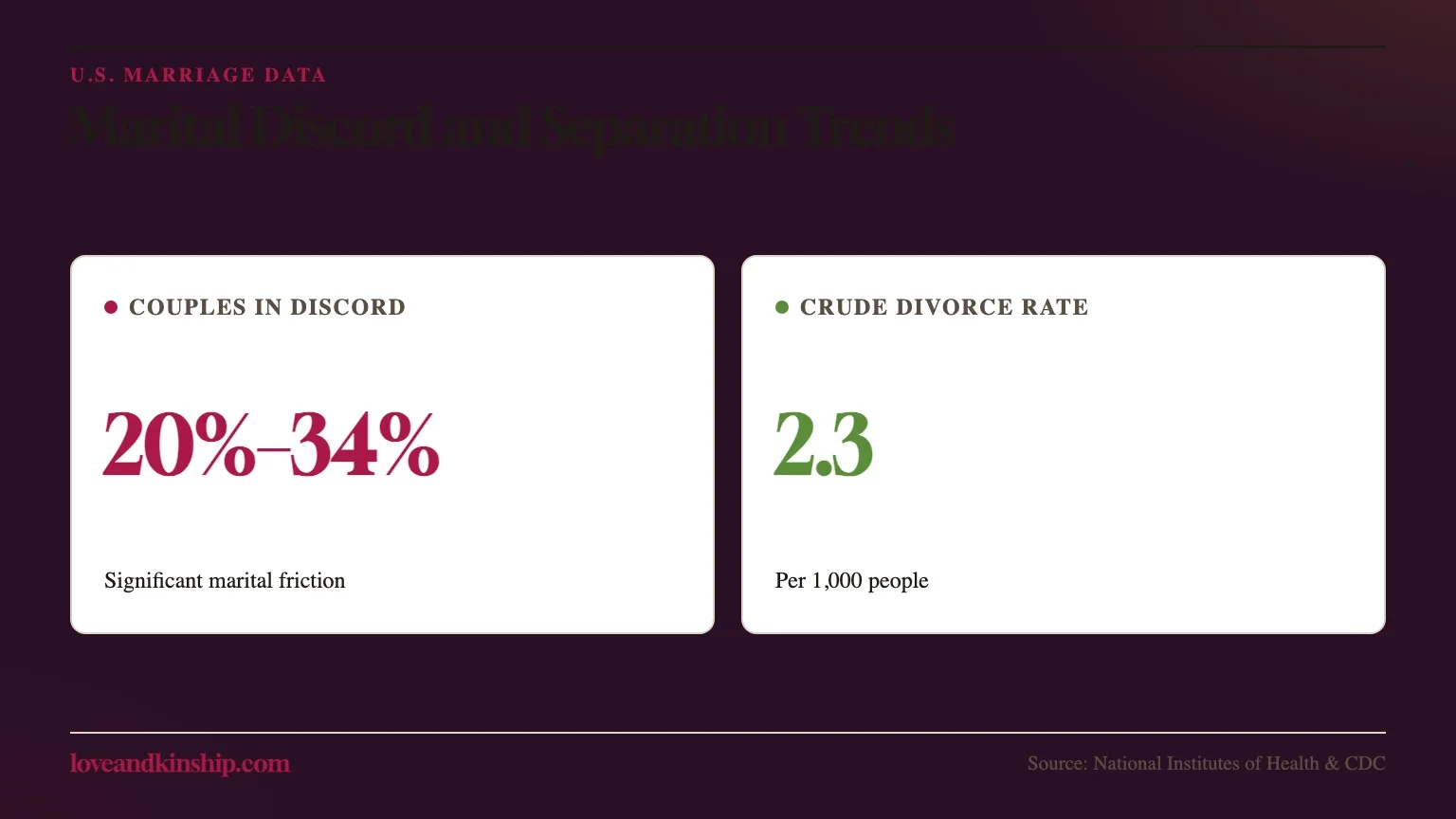
Peer-reviewed research compiled by the National Institutes of Health reveals that between 20% and 34% of married couples experience significant marital discord.
Yet many spouses do not immediately file for divorce; they weigh profound emotional and practical anchors.
According to data from the Centers for Disease Control and Prevention, the crude U.S. divorce rate recently reached 2.3 per 1,000 people.
This trend highlights how many couples actively choose to navigate turbulent seasons together rather than immediately separating.
9 Reasons Couples Remain Together Through Difficult Seasons
Certified relationship coaches Poppy and Geoff Spencer emphasize that staying in an unhappy union often involves conscious, protective compromises.
Examining these nine core motivations can help you assess your situation without guilt or shame.
1. Financial Security
Maintaining one household is significantly more affordable than funding two separate residences. Splitting assets can derail retirement plans and strain monthly budgets.
Research from the Pew Research Center shows that divorced adults face substantially lower median household incomes than married peers.
Financial stability provides necessary safety during unpredictable economic seasons.
2. A Solid Social Network
Over decades of marriage, mutual friendships and extended family ties become deeply intertwined. Ending the partnership often fractures your established social circle.
Preserving these cherished community connections offers daily warmth, even when romantic intimacy fades. Belonging remains a fundamental human need.
3. Protecting the Children
Many parents worry about the emotional disruption of split custody schedules and separate homes. Staying together provides young children with educational and domestic continuity.
While high-conflict environments harm children, low-conflict partnerships can preserve a predictable routine that parents hesitate to disrupt.
4. Feeling Comfortable Enough
Familiarity offers a powerful sense of predictability. Even when joy feels scarce, knowing what each day holds seems less intimidating than entering the complete unknown.
Predictable routines often outweigh the emotional friction of dismantling an established life.
5. Beliefs Against Divorce
Spiritual convictions, sacred vows, or family traditions often lead individuals to view divorce as impermissible. For many, marriage is a lifetime covenant rather than a temporary arrangement.
Remaining committed honors their foundational moral identity, providing purpose even during painful stretches.
6. Valuing Companionship and Belonging
Loneliness can occur inside a marriage, but the silence of an empty house carries a different weight. Having another presence in your home provides quiet grounding.
Longtime relationship coaches Geoff and Poppy Spencer note that spouses often value this steady sense of shared presence.
7. Shared Core Values
You might struggle with daily communication while remaining united on fundamental ethics, finances, and worldview. These shared anchors generate genuine mutual respect.
When core principles align, partners often decide that collaborative purpose outweighs personal dissatisfaction.
8. Believing Your Spouse Is a Good Parent
You may lose romantic attraction toward your partner while still admiring their parenting dedication. Watching your spouse nurture your children builds lasting respect.
Operating as an intact co-parenting unit under one roof keeps daily caregiving consistent and collaborative.
9. Preserved Shared Laughter
Even during distant periods, private humor and decades of shared context can spark unexpected laughter. A brief joke can instantly revive old warmth.
These shared smiles prove that friendship and human fondness still endure beneath chronic frustration.

Three Guidance Pillars to Reclaim Your Well-Being
Pillar 1: Establish Healthy Communication Boundaries
Replace reactive criticism with calm, direct requests regarding your daily expectations. Step away from conversations the moment they slide into contempt or defensiveness.
Gentle boundaries protect your mental energy and prevent everyday friction from hardening into permanent resentment.
Pillar 2: Build Independent Fulfillments
Avoid relying on your spouse to meet all your emotional, intellectual, and creative needs. Invest deeply in friendships, personal hobbies, and professional interests outside the home.
Cultivating an independent life provides emotional resilience and takes immense pressure off your relationship.
Pillar 3: Introduce Low-Pressure Shared Rituals
Create simple, non-demanding routines, such as enjoying morning tea together without digital distractions. Brief neutral moments rebuild casual goodwill without requiring intense emotional vulnerability.
Small, steady habits slowly re-establish interpersonal safety over time.
Real Voices: An Anecdote from the Field
Elena, a 42-year-old educator, spent years feeling isolated in her quiet marriage. She remained committed because she and her husband shared core values and parented seamlessly.
Rather than demanding emotional changes her husband could not provide, Elena cultivated outside creative pursuits. This shift restored her peace and brought new warmth to their household.
Implementation Lab: A Conversation Script for Clarity
Starting an honest conversation about your marriage requires neutral phrasing rather than accusations. Use this three-step framework during a quiet, private moment.
Step 1: Acknowledge the foundation. Say: “I truly value our teamwork as parents and the life we have built together.”
Step 2: State your emotional experience. Say: “Lately, I feel we are functioning like polite roommates rather than partners.”
Step 3: Offer a collaborative experiment. Say: “Would you be willing to schedule a regular weekly check-in or consult a professional together?”

Safeguards: Recognizing Red Flags and Getting Help
While weathering marital difficulties is common, staying in an unsafe environment is dangerous. Physical intimidation, substance abuse, and ongoing deceit require immediate outside intervention.
The Gottman Institute found that unhappy couples wait an average of six years before pursuing professional counseling. Waiting often allows manageable resentments to deepen unnecessarily.
Research from the American Association for Marriage and Family Therapy shows that over 75% of couples who engage in therapy experience meaningful relationship improvement.
Frequently Asked Questions
Can an unhappy marriage become happy again?
Yes, marriages frequently recover when both partners actively practice new behavioral patterns. Consistent effort and guided mediation often revive emotional intimacy.
Is staying together solely for the children advisable?
Low-conflict homes can provide steady routines, but ongoing hostility negatively affects child development. Prioritizing emotional peace remains the healthiest choice for children.
How do I know when it is time to leave?
You should consider exiting when your spouse repeatedly dismisses your boundaries or refuses mutual solutions. A total absence of respect indicates the dynamic has become destructive.
How can we afford counseling on a strict budget?
Seek out community clinics, sliding-scale practitioners, or university counseling centers with supervised graduate interns. Telehealth platforms also offer flexible, lower-cost sessions.
Moving Forward With Clarity
Your reasons for remaining in your marriage are valid, layered, and deeply human. Honor your journey without imposing self-blame.
This week, try introducing one small ritual or personal boundary that protects your joy and provides emotional grounding.