Imagine standing in the hallway of your home, listening to a silence that feels heavier than usual. The moving boxes are unpacked in a distant college dorm, the last car has pulled out of the driveway, and suddenly, it is just the two of you staring across the kitchen island. For decades, the beautiful, exhausting chaos of raising children dictated your schedules, your dinner conversations, and your sleep cycles. In that profoundly quiet moment, many partners experience a sharp pang of anxiety; they fear they have nothing left to say to one another. But what if that silence is not an ending? What if it is the blank canvas for your most significant relationship growth? As an empty nest marriage takes shape, the initial distance you feel often transforms into an unparalleled opportunity to rediscover the person you married.
State of the Union: Navigating the Empty Nest Marriage
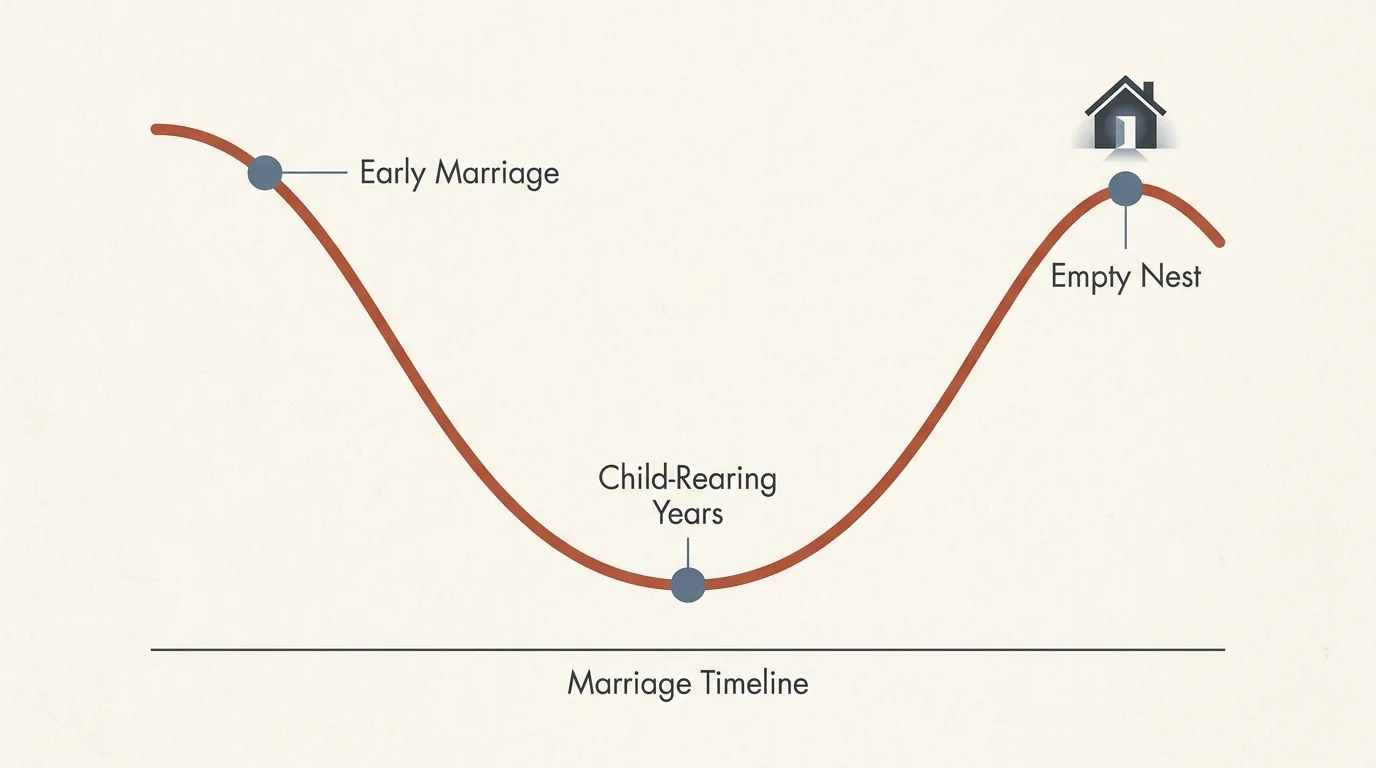
Before we examine the signs of relationship growth, we must look at the actual landscape of marriages after the children leave home. You have likely read startling headlines about “gray divorce”—the sociological phenomenon of couples splitting after age fifty. While the American Psychological Association notes that divorce rates for older adults have risen, a deeper dive into relationship science offers a much more hopeful perspective. Decades of longitudinal studies reveal that marital satisfaction frequently follows a U-shaped curve. Happiness tends to dip during the intense child-rearing years, consumed by logistical demands and parental stress, only to rebound significantly once the nest empties.
Couples who weather the storm often report experiencing a second honeymoon phase, characterized by renewed friendship, increased leisure time, and deeper emotional intimacy. The couples who thrive do not simply survive the transition; they actively reinvent their partnership. If you find yourself wondering whether your marriage milestone as seniors is a cause for celebration or a warning sign, recognizing the markers of a thriving, evolving partnership will ease your mind and guide your next steps.

The 7 Signs Your Relationship Has Grown Stronger
Transitioning into this new phase requires deliberate effort. Let us explore seven clear indicators that your partnership is flourishing, alongside actionable repair strategies to help you cultivate these very traits if you feel your connection is lagging.
1. Your Rituals of Connection Look Different—and Better
When the kids lived at home, your rituals might have been reduced to a hurried kiss before rushing to soccer practice or a brief logistical debrief before collapsing into bed. A strong empty nest marriage features intentional, unhurried moments of bonding. You embrace what the Gottman Institute calls “rituals of connection.” Maybe you now share morning coffee on the porch without checking your smartphones; perhaps you take an evening walk to discuss your day without the interruption of teenagers asking for the car keys.
Repair Strategy: If you want to strengthen this area, initiate a simple, predictable daily ritual. Ask your partner what small habit they would enjoy starting together. It does not require a grand romantic gesture to build emotional safety. Consistency matters far more than intensity. Dedicate fifteen minutes every evening to sit face-to-face and discuss one thing you each look forward to the next day.
2. You Use Healthy Conflict Scripts to Navigate New Friction
With more unstructured time together, new friction points inevitably arise. Suddenly, you are navigating shared spaces differently, or perhaps you are adjusting to the drastic schedule shifts of early retirement. Couples who grow stronger do not avoid arguments; they handle them with grace and curiosity. Beneath sudden flashes of anger usually lies a vulnerable need for connection or understanding.
Repair Strategy: Thriving partners use gentle start-ups when disagreements spark. Instead of throwing a criticism like, “You never help around the house now that you are retired,” you change your conflict script. You might say, “I am feeling overwhelmed with the chores today, and I need your help to figure out a better system for us.” Notice how this shifts the dynamic from a personal attack to a collaborative problem-solving effort. Modifying your language diffuses defensiveness and reminds you both that you remain on the same team.
3. Financial Transparency Feels Like Teamwork, Not a Battle
Money represents a significant source of stress for many couples, especially as retirement approaches and incomes transition from dynamic to fixed. A key sign your marriage has grown stronger is how you handle these financial transitions. Rather than hiding concerns, making unilateral purchases, or operating in anxious silos, strong couples sit down to discuss budgets, healthcare costs, and legacy planning with absolute transparency.
Repair Strategy: Schedule a monthly financial “state of the union” meeting where you discuss money without judgment. You could open the conversation by saying, “I want to make sure we are aligned on our spending this month so we can confidently save for that trip to the coast.” When financial transparency becomes a routine practice, it eradicates secrecy and builds profound mutual trust.
4. You Embrace the Silence Without Anxiety
Early in the empty nest transition, silence can feel like a glaring symptom of disconnection. The quiet house echoes with the memories of a bustling family life. Over time, however, secure couples find deep comfort in quiet companionship. You no longer feel the frantic pressure to fill every void with chatter. Reading in the same room, gardening side-by-side, or simply driving together without the radio blaring becomes a comforting reassurance of your partner’s presence. You recognize that parallel play is a form of profound intimacy.
5. Intimacy Is Redefined Beyond Physical Routine
Love after retirement requires a paradigm shift in how you define intimacy. Aging brings physiological changes that alter physical affection and stamina. Strong couples adapt by expanding their definition of closeness rather than mourning their youth. They prioritize non-intimate touch, prolonged eye contact, and deep emotional check-ins. They laugh together about the awkwardness of aging bodies and communicate their physical needs without shame. This flexibility ensures that the romantic spark matures, broadens, and deepens rather than extinguishing under the pressure of unrealistic expectations.
6. You Establish United Boundaries With Your Adult Children
One of the greatest tests of a senior marriage is navigating relationships with grown children. Whether you are dealing with adult children moving back home, managing the arrival of grandchildren, or setting limits on financial support, thriving partners present a united front. They discuss their boundaries privately before communicating them to their family. This solidarity protects the marriage from being triangulated; it ensures that your primary allegiance remains firmly with each other.
7. You Share a Unified Vision for Your Next Chapter
Couples who drift apart after the kids leave often do so because their shared project—raising a family—is complete, and they failed to replace it with a new collaborative purpose. A definitive sign of relationship growth is the active brainstorming of your next chapter. You dream together. Whether you are planning cross-country travel, volunteering for a cause you both care about, or simply redesigning the old guest room into a shared hobby space, you cultivate a mutual purpose that keeps you moving forward hand in hand.

Expert Guidance on Sustaining Relationship Growth
Relationship scholars and licensed therapists universally agree that the empty nest phase requires deliberate re-engagement. “The empty nest is not a void to be filled, but a space to be explored,” notes the underlying philosophy of Emotionally Focused Therapy (EFT), pioneered by Dr. Sue Johnson. When couples recognize that their primary attachment bond needs tending just as much as their growing children did, they unlock a profound depth of love.
Couples who proactively seek to understand their partner’s inner world during major life transitions exhibit the highest levels of long-term resilience. You must remember that you are not the exact same people who stood at the altar decades ago; getting to know the current versions of yourselves is the ultimate adventure. Giving yourselves permission to evolve is the cornerstone of sustainable love.
Your 30-Day Rebuilding Plan for Love After Retirement
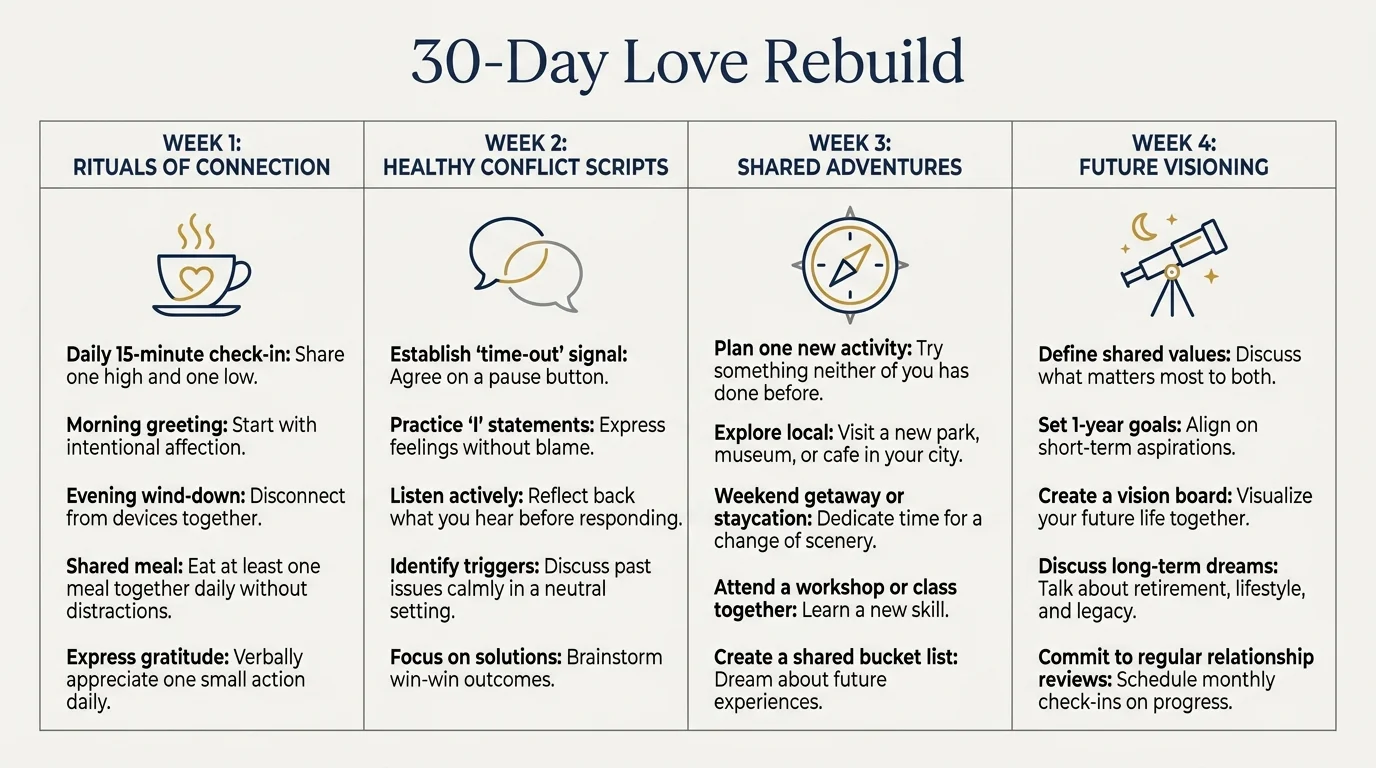
If you recognize areas where your marriage could use a tune-up, embarking on a structured rebuilding plan can spark incredible momentum. You do not need sweeping lifestyle changes to feel a difference; small, consistent pivots yield massive results. Begin your first week by focusing entirely on appreciation. For seven consecutive days, voice one specific thing you admire about your partner daily, focusing on who they are rather than what they do for you. Tell them you admire their sense of humor or their quiet resilience.
During the second week, tackle the concept of parallel play. Dedicate time to engage in your own individual hobbies while remaining in the same physical space. One of you might read a novel while the other works on a puzzle. This practice fosters a healthy sense of independence within the safety of your connection. As you enter the third week, introduce a new shared experience. Trying something novel—whether taking a local cooking class, visiting a neighboring town you have never explored, or learning a new card game—floods the brain with dopamine, closely mimicking the chemical rush of early romance.
Finally, in the fourth week, sit down for a vision-casting session. Pour a glass of wine or brew a pot of tea, and openly discuss your individual bucket lists. Look for the beautiful intersections where your dreams overlap, and use those intersections to map out your shared goals for the next year.

Safeguards: When to Seek Professional Support
Even the most dedicated partners hit roadblocks. Navigating sensitive topics like declining health, grief over aging, or unexpected financial strain requires robust safeguards. Establishing boundaries around your conflict is crucial; you must agree to step away if an argument becomes too heated, promising to return to the conversation within twenty-four hours once your nervous systems have calmed.
If you find yourselves trapped in endless cycles of miscommunication, or if the silence in your home has evolved from peaceful to punishing, it is time to seek professional counseling. Reaching out to a licensed marriage and family therapist is never a sign of failure; it is a profound declaration that your relationship is worth fighting for. Organizations like the American Association for Marriage and Family Therapy provide excellent directories to help you find qualified support explicitly tailored to the needs of older couples navigating life transitions.
Frequently Asked Questions
How do we reignite physical intimacy when we feel insecure about aging?
The most effective approach involves removing the pressure of performance entirely. Return to the basics of affectionate touch—holding hands while watching television, offering long hugs in the kitchen, and cuddling before sleep. Openly discuss your changing physiological needs with deep compassion. When you communicate your vulnerabilities without shame, you create an environment where a softer, more emotionally resonant physical intimacy can flourish.
How can we align our financial goals if one of us wants to spend and the other wants to save?
Finding a middle ground requires uncovering the core emotional fears behind each financial stance. Often, a desire to save equates to a fundamental need for safety and security, while a desire to spend or travel equates to a fear of missing out on life’s remaining adventures. Once you validate those underlying emotions, you stop arguing about the numbers and start addressing each other’s hearts. From there, you can creatively budget for a modest, realistic version of both goals.
What is the best way to handle disagreements regarding our adult children?
Differences in parenting do not vanish just because the kids move out; in fact, issues like financial bailouts or involvement in your children’s relationships can cause intense friction. The key is establishing a strict policy of private consensus. Always discuss your stance with your partner behind closed doors before making any promises or offering any advice to your adult children. Presenting a united front ensures you never undermine one another and protects the sanctity of your marriage.
Can we rebuild trust after a long period of emotional distance?
Absolutely. Many couples drift apart during the child-rearing years, functioning more like roommates than romantic partners. Trust is rebuilt through small, consistent, and reliable actions over time rather than through grand, sweeping apologies. Keeping your daily promises, showing up faithfully for your rituals of connection, and offering transparent communication are the essential building blocks of renewed faith in your partnership.
A Hopeful Send-Off: Your Shared Commitment Exercise
Your empty nest marriage holds the beautiful potential to be the most authentic, liberating, and deeply satisfying era of your life together. To cement your progress and step into this phase with intention, I invite you to try a simple shared commitment exercise tonight. Sit facing your partner, gently hold their hands, and maintain eye contact for sixty full seconds without speaking. Let the initial awkwardness pass.
Then, take turns completing this sentence: “As we enter this new chapter together, I am most excited to discover…” Lean completely into the vulnerability of this moment. The chaotic, demanding years of raising a family have passed, leaving behind a resilient and tested foundation. You have weathered the storms, you have paid your dues, and now, the rest of this beautiful story belongs entirely to the two of you.