
You are sitting on the living room sofa together after a remarkably long week. The television hums quietly in the background while you both scroll mindlessly through your smartphones, occasionally sharing a brief laugh over a video. On paper, your life looks beautiful and complete. You have built a remarkably stable home, nurtured a loving environment, and maintained a peaceful, functional partnership. Yet, an invisible, quiet chasm stretches between you on those cushions. It is exactly in these comfortable, predictable moments of domestic routine that the seeds of a profound emotional crisis can silently take root. Many committed partners operate under the dangerous assumption that affairs only happen in miserable, conflict-ridden marriages where screaming matches are the norm. The unsettling truth is that infidelity frequently shatters relationships that both partners genuinely consider happy, secure, and loving.
To understand this paradox, we must look closely at the data surrounding modern marriage. Research compiled by the American Psychological Association indicates that infidelity factors into a significant percentage of divorces across all demographics. However, a striking number of people who stray report high levels of marital satisfaction right up until the affair is discovered. They love their spouses deeply, enjoy their shared family life, and harbor absolutely no intention of leaving their marriage. This reality shatters the traditional villain narrative we use to explain betrayal. So, what drives someone to risk everything they have spent years building? Understanding the psychology behind this destructive choice requires setting aside simplistic judgments and examining the deep, often entirely unspoken emotional needs that govern human behavior in long-term attachments.

The Psychology of Betrayal in Contented Homes
When you examine human connection through the lens of Emotionally Focused Therapy, you discover that human beings are fundamentally wired for secure, enduring attachment. We desperately crave the safety of a partner who knows us intimately and will stand by us through adversity. However, in long-term partnerships, this absolute necessity for security often inadvertently overshadows the equally profound human desire for novelty, mystery, and dynamic self-discovery. Prominent relationship scholars and behavioral experts suggest that infidelity within a genuinely happy marriage is rarely about rejecting the current partner. Instead, it is frequently a misguided, destructive quest for a lost or suppressed part of the self.
A partner might step outside the boundaries of their marriage to experience an identity they left behind in their twenties, to feel vibrant and desired in a completely new way, or to reconnect with a sense of bold autonomy that gradually eroded under the beautiful but heavy responsibilities of mortgages, co-parenting, and career building. When life becomes a series of logistical negotiations about grocery lists and pediatrician appointments, the emotional thrill of being seen as a complex, attractive individual fades. In these scenarios, the person cheating is not necessarily looking for another partner to replace you; they are desperately searching for another version of themselves. They want to feel alive, and they erroneously choose to find that vitality through transgression rather than bringing that energy back into the marriage. Recognizing this psychological mechanism does not excuse the profound devastation of betrayal, but it does illuminate exactly where couples need to focus their preventative work.

Evidence-Backed Repair Strategies for Deepening Connection
You have the power to affair-proof your relationship by actively cultivating emotional depth and refusing to let your partnership coast on autopilot. Building resilience requires intentional daily practices that bridge the gap between secure attachment and passionate engagement. Incorporating specific, research-backed tools into your routine ensures that both partners feel seen, valued, and emotionally tethered to one another.
Mastering Daily Rituals of Connection
Borrowing foundational concepts from The Gottman Institute, rituals of connection serve as crucial anchors against the slow emotional drift of daily life. When couples feel securely tied to one another through predictable, meaningful daily touchpoints, they are statistically far less likely to seek emotional validation from outside sources. You must establish a dedicated twenty-minute stress-reducing conversation every single evening. The absolute rule of this ritual is that you only discuss outside stressors—such as workplace drama or extended family tension—and never tackle your internal relationship issues. Your only job during this conversation is to offer unwavering solidarity. When your partner complains about a difficult colleague, you must resist the urge to offer logical solutions. Instead, validate their emotional experience. “I can see exactly why that meeting exhausted you today; it makes total sense that you feel completely overlooked by your manager right now.” This active attunement proves to your partner that you are their safest harbor in a chaotic world.
Rewriting Your Conflict Scripts
How you handle inevitable disagreements dictates the underlying emotional safety of your home. Avoiding conflict entirely creates a hollow, fragile peace that breeds unspoken resentment and invites secret lives. Culturally diverse couples and LGBTQ+ partners often face unique external stressors, making the need for internal emotional safety even more critical. Instead of suppressing your unmet needs to keep the peace, you must utilize a gentle start-up strategy to address friction before it morphs into bitterness. Use statements that focus on your internal feelings rather than your partner’s perceived flaws. “When we spend our evenings in completely separate rooms without checking in, I feel intensely lonely and disconnected. I really need us to spend at least half an hour sitting together before we go to sleep.” This level of raw, active vulnerability prevents the emotional starvation that so frequently precedes an affair.
Practicing Radical Financial Transparency
You might initially wonder how money relates to romantic infidelity, but financial secrecy routinely serves as a psychological gateway to emotional or physical affairs. Keeping small secrets about credit card debt or hidden purchases actively erodes the foundation of trust in your partnership. Practicing radical transparency with your shared and individual resources builds a strong muscle for honesty that directly translates to emotional fidelity. Schedule a monthly financial state-of-the-union meeting where you review your accounts with zero judgment. “I am feeling a bit anxious about our spending trajectory this month, and I want to make sure we are still aligned on our savings goal. Can we look at the budget together so I can feel more secure?” Eliminating financial shadows ensures that you are truly operating as a unified team with no hidden parallel lives.
Insights from the Therapy Room
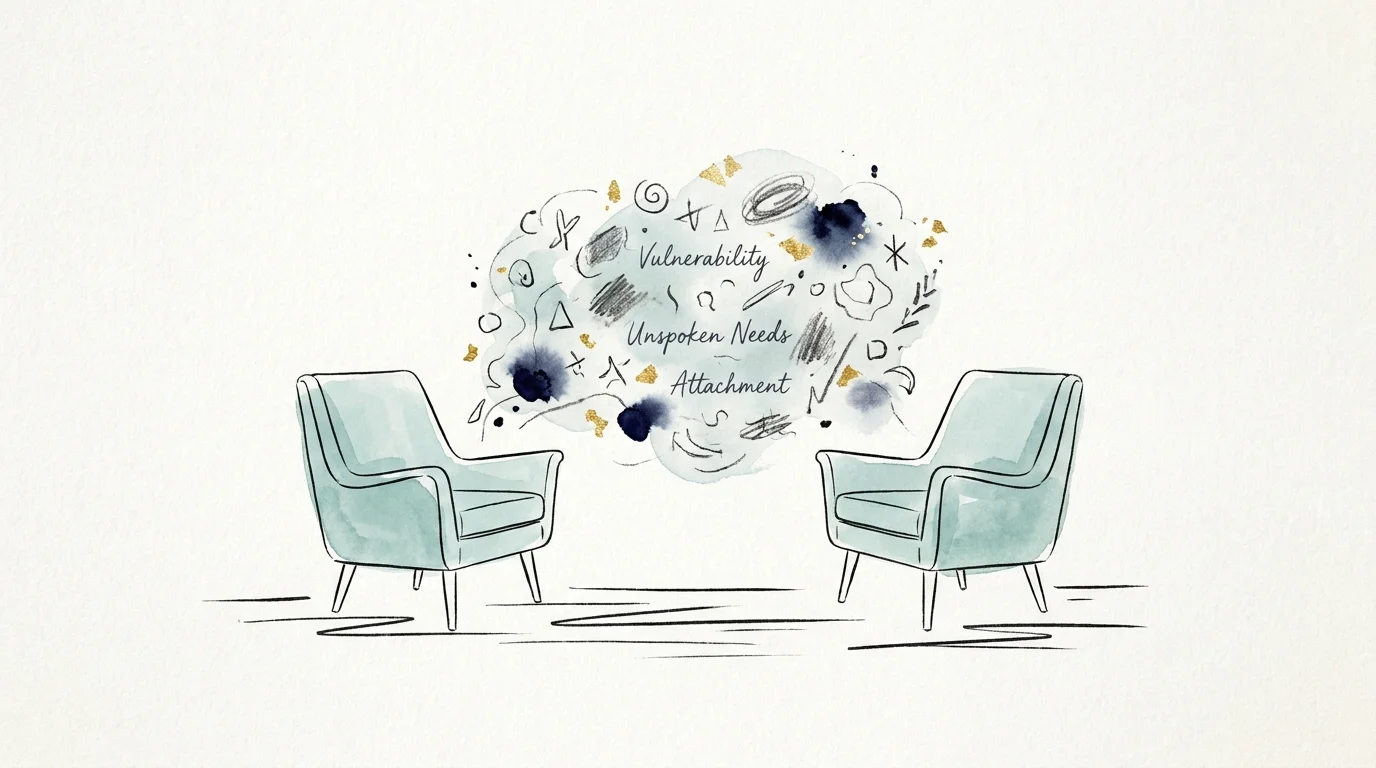
Licensed relationship therapists and certified intimacy coaches routinely observe that the modern marriage carries an absolutely unprecedented psychological burden. Today, we expect our partners to be our steadfast best friends, equitable co-parents, flawless financial collaborators, and endlessly passionate lovers. When one of these heavy pillars inevitably falters under the weight of real life, the resulting disillusionment can make a casual outside connection seem like a magical, effortless cure. Clinical experts emphasize that affairs exist as a painful duality—they are simultaneously an act of profound betrayal and a desperate expression of longing and loss.
Grasping this complex reality is absolutely vital for both preventing infidelity before it starts and healing from it if the unthinkable happens. You must learn to actively mourn the idealized, flawless version of your relationship and commit instead to building a highly resilient, deeply authentic bond. A strong marriage is not one that avoids challenges; it is one that embraces the messy, evolving nature of long-term love. Your partnership must be a living, breathing entity that adapts to new seasons rather than a static contract signed years ago.
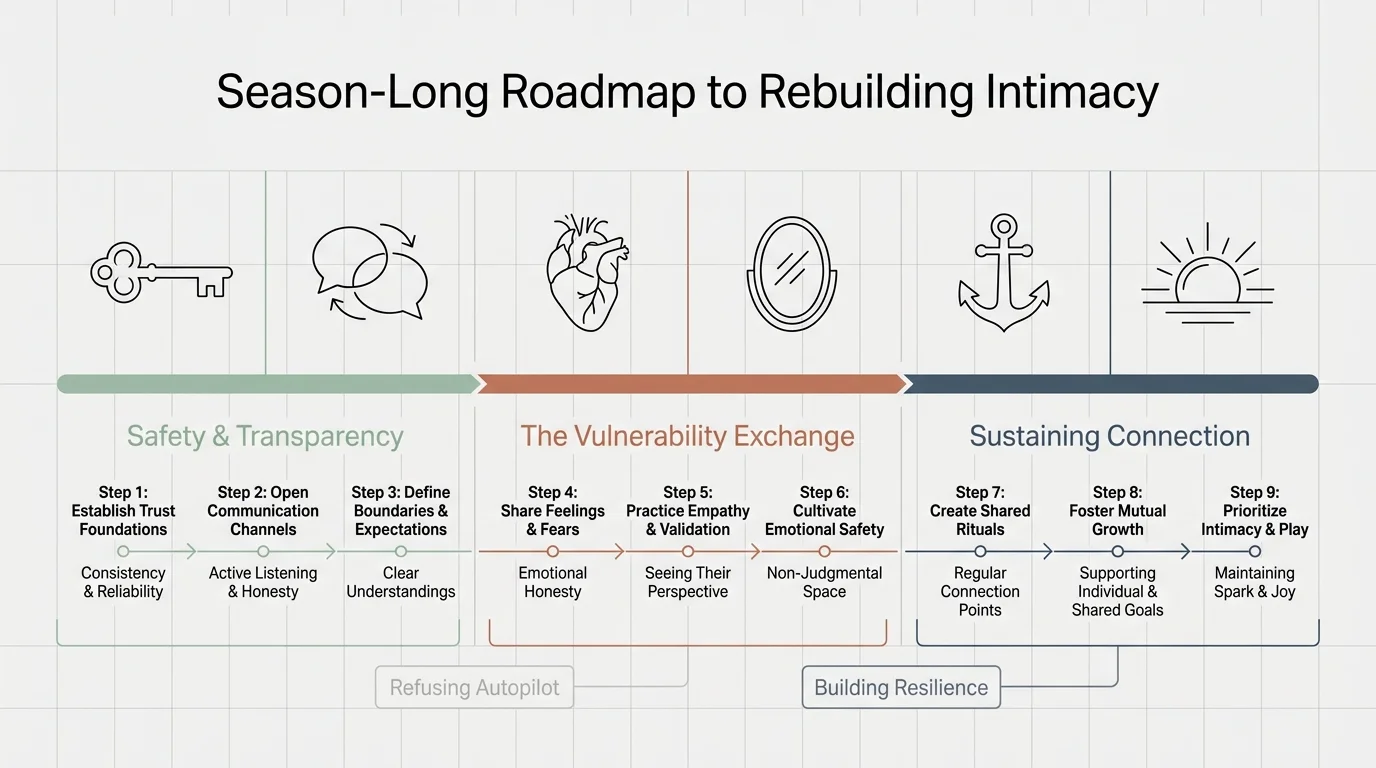
Your Season-Long Roadmap to Rebuilding Intimacy
Transforming the trajectory of your relationship requires a deliberate, sustained effort rather than a frantic weekend of damage control. Let us map out a dedicated, season-long roadmap to radically deepen your mutual connection and affair-proof your life together. During the first phase of this journey, your exclusive objective is grounding yourselves in present-moment awareness. You must actively notice when your partner makes a subtle bid for your attention—a heavy sigh from the kitchen, a random observation about the news, or a quiet request for physical affection. Your task is to physically turn toward them, making direct eye contact, rather than ignoring the cue or mumbling a distracted response while looking at a screen.
As you transition into the second phase, you will actively cultivate profound curiosity about the person sitting across the dinner table. Assume that you do not actually know everything about them anymore. People change, and your partner has evolved significantly since you first met. Ask highly open-ended questions about their current dreams, shifting fears, and complex internal life. Set aside every rigid assumption you have accumulated over your years together.
Moving into the third phase of your roadmap, you must practice proactive vulnerability. It is time to share a deep-seated fear or a personal insecurity that you have successfully hidden behind a polished facade of competence. Admitting that you feel inadequate at work or terrified about aging invites your partner to see your humanity and step into a protective, nurturing role. Finally, in the fourth phase, you will dedicate time to intentional future crafting. Sit down together with a blank notebook and design a bold shared vision for your next five years, explicitly ensuring that this vision includes ample space for individual personal growth, novel experiences, and mutual adventure.

Establishing Safeguards and Knowing When to Seek Help
Protecting your marriage from the threat of infidelity requires establishing incredibly clear external boundaries and possessing the wisdom to seek professional help long before a minor disconnect escalates into a full-blown crisis. Emotional affairs almost always begin innocently—perhaps with a friendly coworker who shares your sense of humor or an old friend who just seems to intuitively “get it” when you complain about your spouse. You must establish a non-negotiable rule of absolute transparency regarding all outside relationships. If you ever find yourself minimizing an interaction, deleting text messages, or hiding the true nature of a conversation from your partner, you have already crossed a dangerous threshold into emotional betrayal.
You also must recognize that specific life transitions create periods of immense vulnerability for your marriage. Entering the chaotic realm of parenthood, navigating the silence of an empty nest, or surviving a sudden career loss can fracture your typical coping mechanisms. During these heavy, disorienting seasons, leaning on a licensed marriage and family therapist is a profound sign of relational strength, not a declaration of failure. A highly trained professional provides a structured, neutral space to process the inevitable growing pains of a maturing partnership, helping you fortify your foundation before those immense pressures can crack your family apart.
Frequently Asked Questions About Relationship Resiliency
How do we maintain vibrant physical intimacy when daily life feels totally exhausting?
Physical intimacy requires highly intentional cultivation, not just waiting for spontaneous desire to magically strike at the end of a grueling day. You must completely shift your focus away from physical performance and redirect it toward deep emotional connection. Engage in sensate focus exercises, prioritize non-demand touch like holding hands or cuddling without the expectation of sex, and openly discuss your shifting physical desires. Creating a low-pressure environment allows your physical connection to naturally evolve and deepen alongside your emotional relationship.
What exact role does financial alignment play in affair prevention?
Chronic financial friction generates a pervasive, exhausting stress that slowly pushes partners into isolated emotional corners. By maintaining a fiercely open dialogue about your shared financial goals and individual money anxieties, you actively eliminate the secrecy that breeds profound resentment. Total transparency in your bank accounts and credit card statements directly correlates to transparency in your emotional lives. When you manage your resources as a completely unified front, you reinforce the mental framework that you are partners in absolutely every aspect of existence.
How do we balance relentless parenting demands with our fundamental marital needs?
Children ultimately thrive in homes where the parental relationship is visibly prioritized and deeply respected. You must learn to ruthlessly protect your couple-time from the endlessly expanding demands of raising a family. Creating a firm, unyielding boundary between dedicated family time and exclusive marriage time signals clearly to your partner that they remain your primary emotional investment. Whether it means enforcing strict bedtimes for children or hiring a sitter for a modest neighborhood walk, protecting your dynamic as a couple is an essential act of family preservation.
Can genuine trust truly be rebuilt if an affair has already shattered the relationship?
Healing from the devastation of infidelity is an agonizingly difficult journey, but it is entirely possible with dedicated, professional, and mutual effort. The betrayed partner must be given expansive emotional space to grieve the loss of trust and ask detailed questions. Simultaneously, the participating partner must demonstrate unwavering accountability, absolute transparency, and immense patience. Rebuilding a secure attachment requires a shared understanding that your first marriage is permanently over; you are now tasked with the daunting but beautiful work of building a completely new, far more honest relationship together from the ashes.
A Shared Commitment to the Future
Deepening your bond is a continuous, daily choice that requires immense courage and a willingness to remain deeply engaged. Tonight, set aside your devices, take your partner’s hands in your own, and hold direct eye contact for one full minute. Acknowledge the incredible journey you have navigated together thus far. Speak an affirmation of your absolute commitment aloud, promising to remain curious, to prioritize vulnerability, and to continuously choose your shared connection over the comfortable silence of distance. By choosing each other actively every single day, you ensure that your happy relationship remains a secure, vibrant fortress for decades to come.