
Picture your living room on a quiet Tuesday evening. The television hums softly in the background; the pale glow of smartphone screens illuminates your faces. You sit mere inches apart from the person you have deeply loved for three decades, yet an invisible, quiet canyon stretches between you. You know their coffee order by heart, you anticipate their exasperated sighs, and you can effortlessly recite the exact stories they will tell at dinner parties. Despite this profound familiarity, the electric thrill of romance feels like a relic from another lifetime. Many committed partners arrive at this precise juncture—a liminal space where comfortable companionship quietly eclipses passionate connection.
You might wonder if the romantic spark naturally and inevitably extinguishes over time. The reality remains far more hopeful: romance does not die of old age; it simply waits for you to actively and intentionally reignite it. Decades of shared history provide a magnificent foundation, but lasting intimacy requires fresh architecture. When you shift your perspective from expecting spontaneous passion to deliberately creating moments of profound connection, you unlock a completely new chapter of your love story.
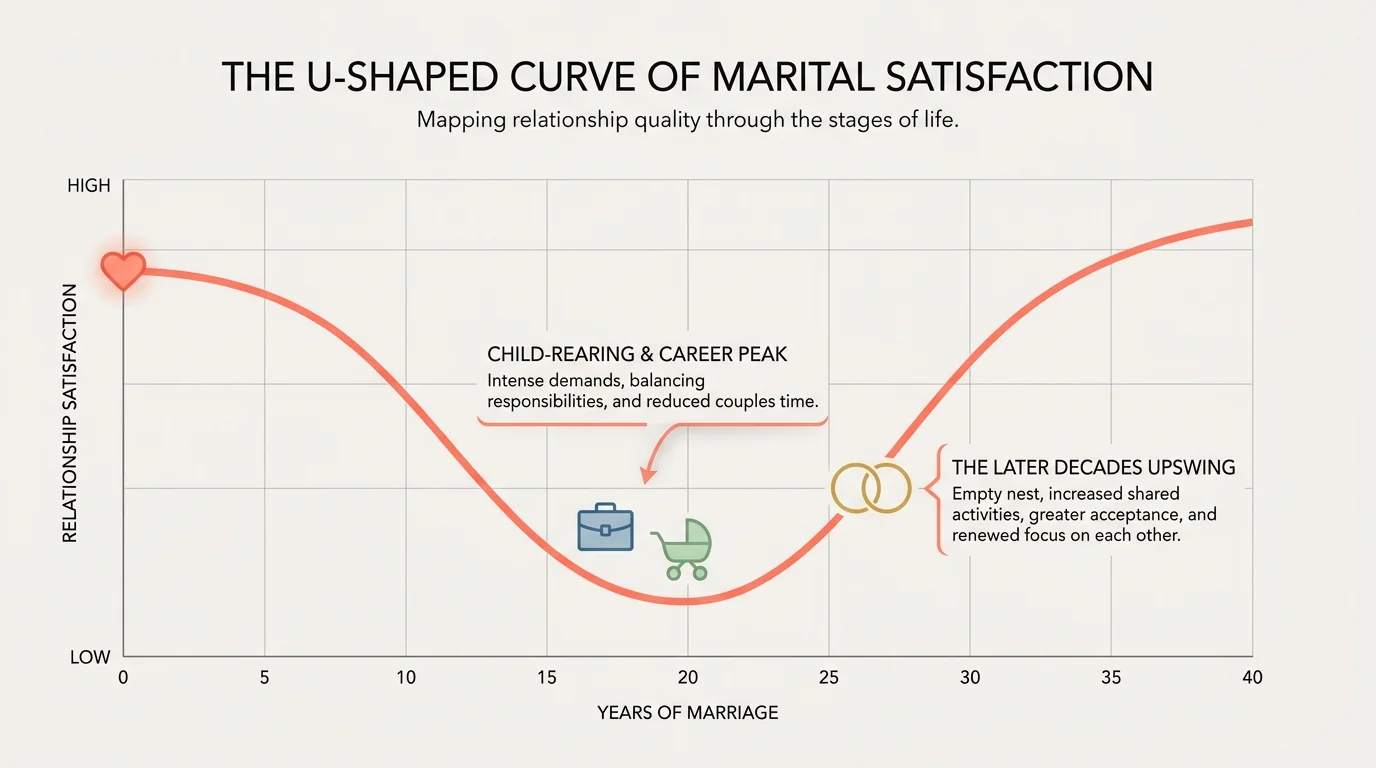
The State of the Union: Understanding the Decades-Long Love Curve
Let us confront the hard data surrounding long-term love. Research published by the American Psychological Association frequently highlights a distinct U-shaped curve in relationship satisfaction. Couples often experience a measurable dip in marital joy during the intense, exhausting child-rearing and peak career-building years, followed by a significant upswing in their later decades. However, this promising upswing does not happen automatically. You must build the bridge to reach it.
A comprehensive longitudinal study published by the National Institutes of Health demonstrates a vital truth; partners who intentionally nurture their emotional bond report significantly higher levels of physical health and psychological well-being as they age. After thirty years, the initial, intoxicating cocktail of dopamine and oxytocin that fueled your early courtship has long since settled into a calmer rhythm. True romantic longevity relies on conscious, deliberate actions rather than spontaneous, fleeting emotions. The widespread cultural myth that passion effortlessly sustains itself causes unnecessary suffering for thousands of couples. You must stop waiting for lightning to strike your relationship and start generating your own electricity through consistent, daily practices.
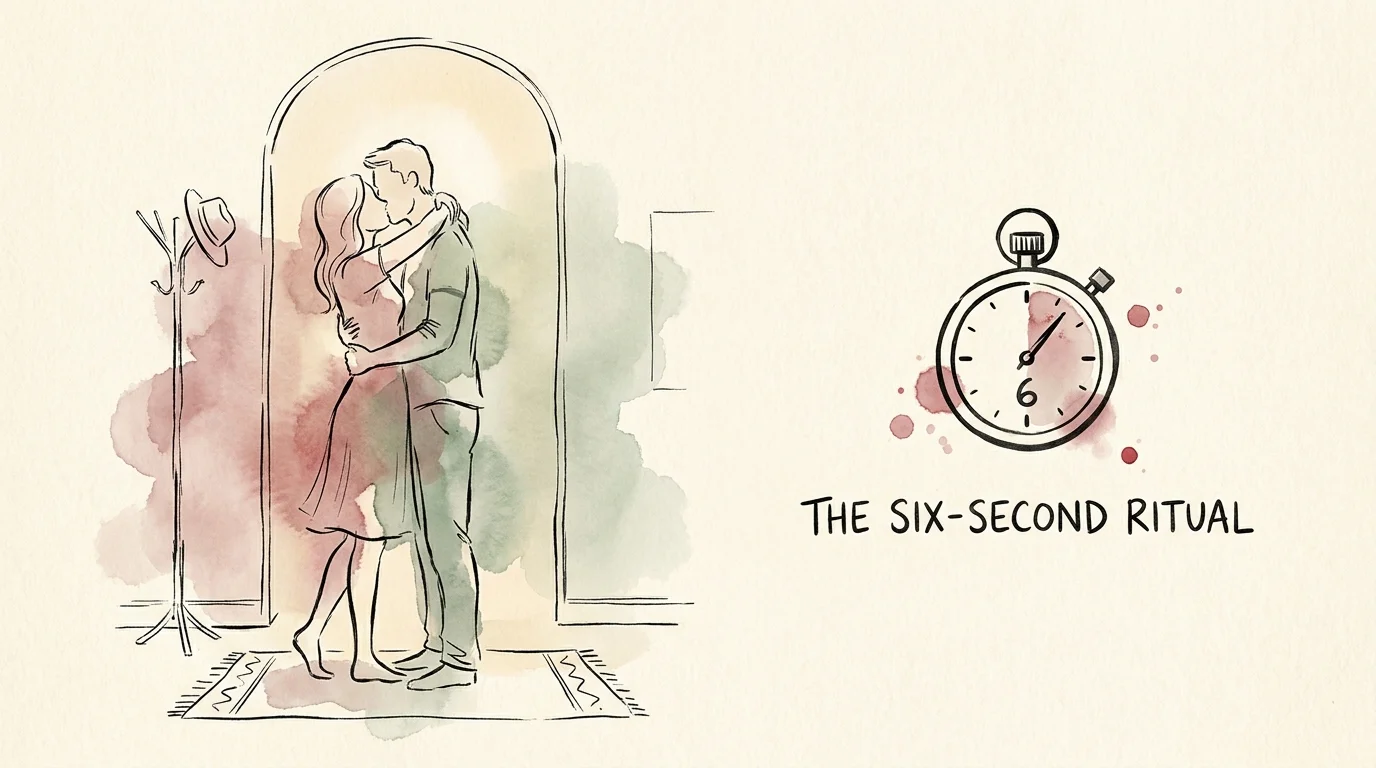
Research-Backed Repair Strategy 1: Mastering Rituals of Connection
Decades of shared living easily breed complacency. You stop greeting each other at the door; you stop asking questions because you assume you already know the answers. The Gottman Institute identifies these small moments as “bids for connection.” Every time you sigh heavily, point out a bird out the window, or ask a seemingly mundane question, you are extending an emotional bid. Healthy couples turn toward these bids, acknowledging their partner’s attempt to connect.
You must establish ironclad rituals of connection to rebuild romance. Begin with the six-second kiss. A quick peck on the cheek as you rush out the door acts merely as a transfer of information, but a deliberate, six-second kiss completely alters your brain chemistry. It stops the frantic momentum of the day and signals to your partner that they remain your priority. Furthermore, you must upgrade your daily check-ins. Instead of asking the tired, predictable “How was your day?”, you must dig deeper into their emotional landscape.
Try utilizing this specific dialogue: “What was the most emotionally draining part of your afternoon, and how can I best support you right now?” When your partner answers, offer pure empathy rather than immediate solutions. If they complain about a frustrating interaction, respond by saying, “That sounds incredibly exhausting; I completely understand why you feel so overwhelmed.” These micro-moments of intense validation build the unbreakable trust required for late-stage romance to flourish.

Research-Backed Repair Strategy 2: Rewriting Your Conflict Scripts
Normalize the fact that thirty years of marriage inherently includes decades of recurring arguments. You likely fight about the exact same fundamental issues today that you fought about during your first year of marriage. According to Dr. Sue Johnson, the brilliant pioneer of Emotionally Focused Therapy, these repetitive arguments rarely center around the actual topic at hand. Instead, they represent a desperate, underlying cry for secure attachment.
Professionals at the International Centre for Excellence in Emotionally Focused Therapy refer to these recurring battles as “demon dialogues.” One partner typically pursues, demanding answers and pushing for immediate resolution, while the other partner withdraws, shutting down completely to protect themselves from overwhelming criticism. This toxic dance destroys romantic safety.
You possess the power to rewrite this script by speaking directly to your underlying attachment needs. The next time you feel the familiar tension rising over a minor household issue, stop the argument immediately. Take a deep breath and use a vulnerability-led script. Say to your partner: “When you walk away while I am speaking, I feel panicked because your presence matters deeply to me. I need to know we are in this together, even when we disagree.” Conversely, if you are the withdrawer, try saying: “I am feeling completely flooded right now and I fear disappointing you. I need twenty minutes to calm my nervous system, but I promise I will come back to finish this conversation.” By naming the emotional fear instead of attacking your partner’s character, you transform a destructive argument into an opportunity for profound emotional intimacy.

Research-Backed Repair Strategy 3: Utilizing Financial Transparency as Emotional Intimacy
Couples rarely view financial discussions as romantic, yet money fundamentally represents safety, power, and future dreams. After thirty years together, retirement planning, fixed incomes, and legacy building take center stage. Avoiding these conversations breeds deep, silent resentment that suffocates romantic affection. True intimacy demands absolute transparency regarding your shared future.
You must approach your financial reality as a unified team. Do not let one partner shoulder the entire burden of managing retirement accounts or navigating the complexities of aging securely. Approach the topic with gentleness and curiosity rather than anxiety or blame. Schedule a quiet, uninterrupted afternoon to discuss your financial fears and your grandest hopes for the next two decades.
Use this actionable dialogue to bridge the gap: “I feel anxious looking at our retirement accounts alone, and I want to make sure we share the same vision for our future. Can we schedule an hour this Sunday to review our goals together so we are completely aligned?” When you share the burden of financial planning, you eliminate a massive source of subconscious stress, clearing the path for genuine affection and lighthearted romance to return to your daily life.
Expert Guidance on Sustaining Lifelong Passion
Relationship professionals routinely witness the extraordinary transformation of couples who refuse to give up on their romantic bond. You must recognize that romance in the later stages of a relationship requires a completely different mindset. Licensed therapists frequently note that mature romance relies less on grand, exhausting gestures and significantly more on profound, unwavering presence.
You are not married to the exact same person you walked down the aisle with thirty years ago. Life experiences, profound grief, immense joy, and physical aging have completely transformed you both. You must stay aggressively curious about the person your partner has become today. If you find yourselves completely stuck in a cycle of emotional distance, reaching out to a certified professional through the American Association for Marriage and Family Therapy provides a safe, structured environment to untangle decades of miscommunication. Seeking therapy after thirty years does not signify failure; it signifies a beautiful, fierce commitment to making your remaining years together your absolute best.
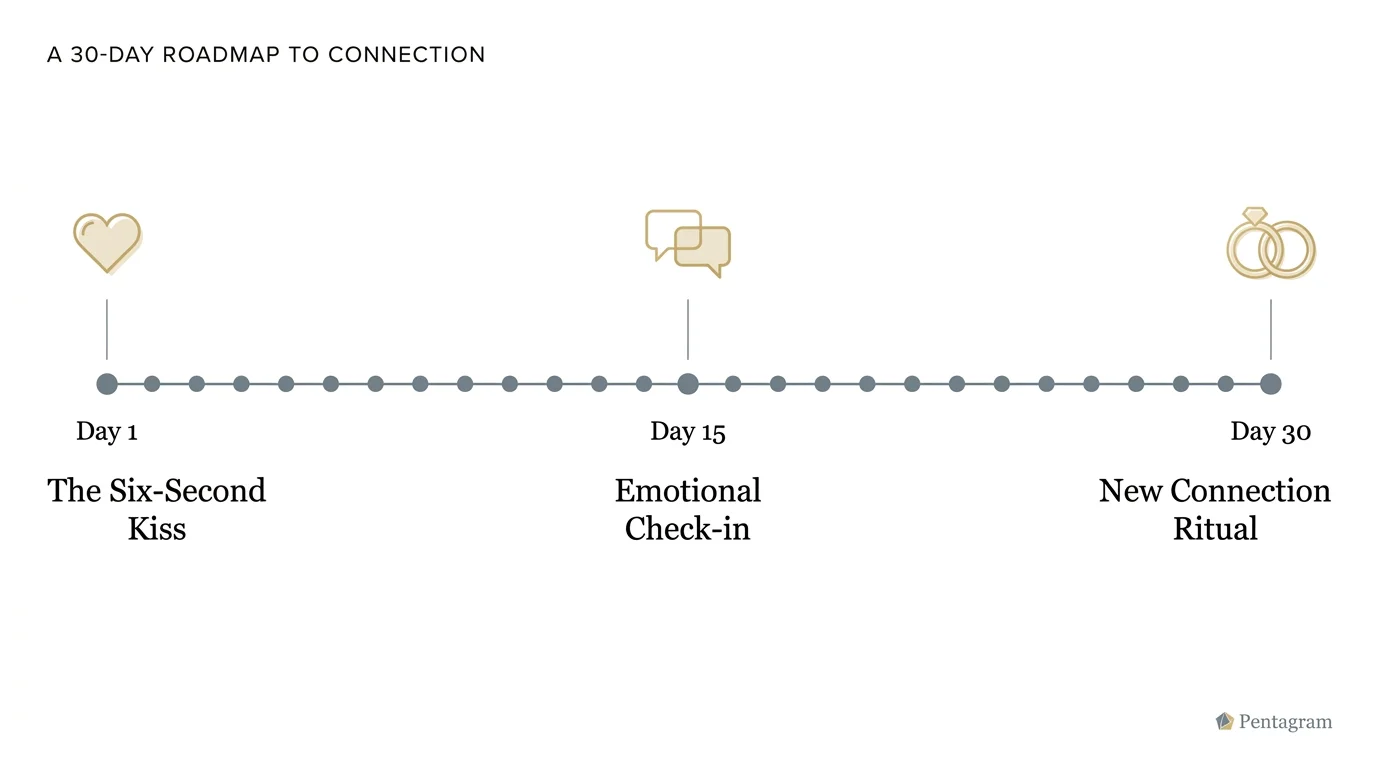
Your Narrative Roadmap: A 30-Day Plan to Rebuild Connection
Knowledge without application changes nothing. You must commit to a structured, deliberate rebuilding plan to breathe life back into your marriage. Treat this thirty-day roadmap as a sacred commitment to your shared future. During the first ten days, you must focus entirely on observation and elimination. Audit your daily interactions. You must ruthlessly eliminate all forms of harsh startup, sarcasm, and casual criticism from your vocabulary. Simultaneously, you must actively watch for your partner’s subtle bids for connection and turn toward them immediately. Acknowledge their thoughts, validate their observations, and offer your undivided attention when they speak.
As you move into the middle ten days of your journey, you must boldly reintroduce physical touch without the immediate expectation of sexual intimacy. Physical distance often grows silently over decades. You must bridge this gap deliberately. Hold their hand while walking through the grocery store; let your hugs linger for a full ten seconds before pulling away; rest your hand softly on their shoulder as you walk past their chair. This non-demand physical affection slowly signals safety to your partner’s nervous system, melting away years of physical guardedness.
Finally, dedicate the last ten days of your plan to designing a brand new shared meaning. After thirty years, you have likely exhausted your old hobbies. You must step out of your comfort zone together to trigger the brain’s novelty receptors. Enroll in a completely new class, explore a neighborhood you have never visited, or begin cooking complex meals from a different culture every Saturday night. Facing a new, mild challenge as a unified team immediately bonds you, replacing stale routines with fresh, shared memories.

Essential Safeguards for Your Relationship Journey
While rekindling romance requires immense vulnerability, you must also maintain healthy boundaries to protect your individual well-being. Recognize that certain topics will naturally trigger intense emotional reactions. When you navigate sensitive territories—such as past betrayals, deeply ingrained family dynamics, or shifting health concerns—you must proceed with extreme caution and immense grace. Do not attempt to resolve thirty years of complex trauma during a single conversation over dinner.
You must acknowledge when a conversation exceeds your capacity to manage it calmly. Implement a strict “time-out” rule. If either of your heart rates elevate significantly and you begin speaking out of anger rather than love, you must pause the discussion. Furthermore, you must aggressively protect your marriage from outside interference. Set firm boundaries around how much extended family drama or adult children’s crises you allow into your daily romantic space. Your primary allegiance must always remain with your partner.
Frequently Asked Questions About Late-Stage Marriage
How do we revive physical intimacy when our bodies have profoundly changed?
You must fundamentally shift your definition of intimacy from a performance-based metric to a pleasure-based experience. Aging brings inevitable physical changes, medical challenges, and fluctuating energy levels. You must communicate openly about what feels good to your body right now, without shame or apology. Focus heavily on sensual touch, extended foreplay, and emotional safety. When you remove the intense pressure to perform exactly as you did in your twenties, you open the door to a deeper, more profound physical connection grounded in absolute acceptance.
How do we reconcile mismatched financial habits as we approach fixed incomes?
Decades of sweeping financial disagreements under the rug will eventually catch up to you. You must sit down with complete transparency. Lay all of your accounts, debts, and fears on the table. You must stop viewing your partner as a financial adversary and start viewing them as your economic teammate. If your habits drastically oppose one another, you must compromise by establishing a shared vision for your retirement lifestyle. Agree on a specific monthly budget that allows the saver to feel secure and the spender to retain a small measure of financial autonomy.
How do we navigate intense disagreements regarding our adult children?
Nothing wedges a couple apart quite like ongoing conflict over adult children. You must establish a rigidly unified front. When your children face crises or demand financial support, you must discuss the issue privately with your partner before offering any solutions. You must never allow an adult child to triangulate your relationship or pit you against one another. Prioritize your marital bond above all else; a healthy, unified marriage actually provides the greatest long-term stability for your entire extended family.
Can we genuinely rebuild trust after decades of profound emotional distance?
Yes, you absolutely can rebuild trust, but you must accept that it requires rigorous consistency over time. Trust does not magically reappear through a single romantic weekend getaway. You rebuild trust by showing up predictably, day after day. You rebuild it by keeping small promises, listening without defensiveness, and repeatedly choosing your partner’s emotional safety over your own ego. Every single time you turn toward their bid for connection, you deposit a valuable coin into your relationship’s emotional bank account.
A Hopeful Commitment to Your Shared Future
You stand at a magnificent threshold. The next decade of your life holds the potential to be your most deeply connected and romantically fulfilling era yet. You have already survived the steepest mountains together; now, you get to carefully design the view from the summit. Tonight, sit directly across from your partner. Look deeply into their eyes—past the familiar lines and the years of shared history—and state your commitment aloud. Say to them: “I proudly choose you today, I honor the life we have built, and I am wildly excited to discover who you will become tomorrow.” Take their hand, take a deep breath, and begin the beautiful work of loving them anew.